

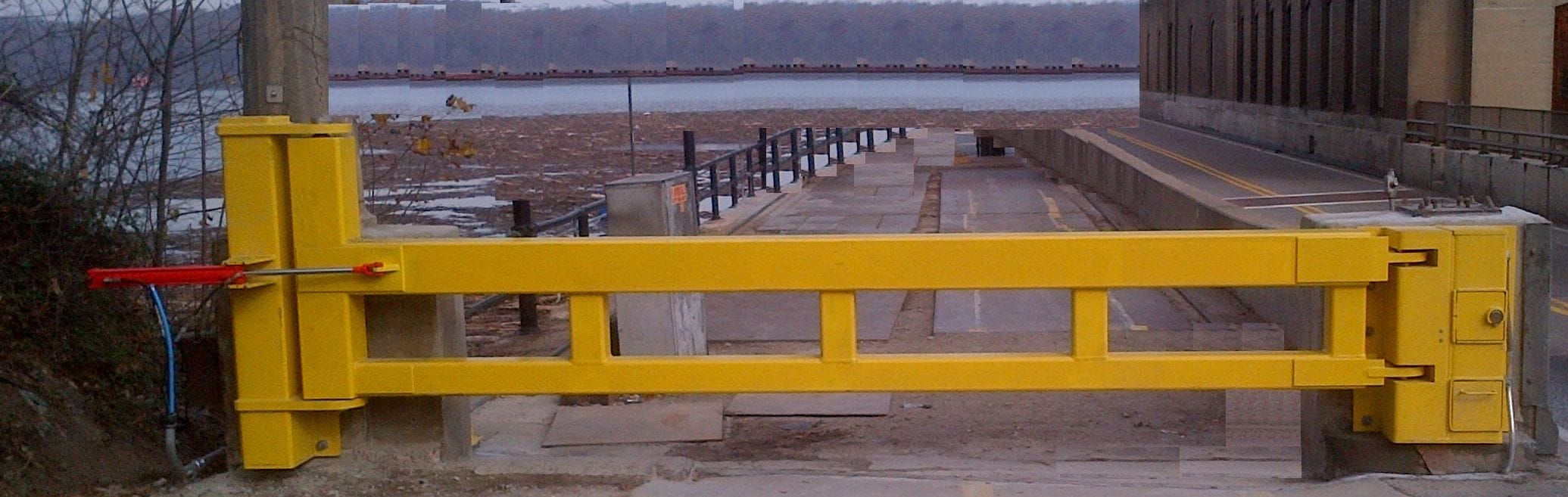
Portable Vehicle Barriers vs. Permanent Solutions: When Each One Is the Right Call
When a threat moves on four wheels, your response time is everything. Whether you’re managing a government facility, a crowded event venue, or a corporate campus, the question is no longer whether you need vehicle access control; it’s how quickly and effectively you can deploy it. Portable vehicle barriers have become one of the most practical answers to that question, offering serious stopping power without the weeks of construction that fixed installations demand.
Unlike permanent systems anchored in concrete, portable barriers can be set up in minutes, repositioned as conditions change, and redeployed across multiple sites, all without excavation permits or lengthy downtime. But that flexibility doesn’t mean compromise. Today’s portable systems are engineered to meet rigorous crash-rating standards and perform in real threat scenarios. The question isn’t whether they work; it’s knowing when to use them, and when a permanent solution is the smarter call.
How Portable Vehicle Barriers Are Engineered for Real-World Threats
The stopping power of portable vehicle barriers does not depend solely on mass. These systems rely on high-tensile steel or composite-reinforced alloys engineered to absorb and redirect kinetic energy on impact. Rather than allowing force to pass through the barrier, the structural design transfers energy downward and outward, away from personnel and protected structures. That level of performance requires precision engineering, not simply placing a heavy object at an access point.
Because portable barriers lack the deep concrete foundations of permanent installations, engineers compensate by designing them with intelligent ground-contact systems. Wide base plates, friction-grip configurations, and interlocking panel systems spread impact forces across a larger surface area. Water-filled or sand-filled ballast chambers dramatically increase effective mass without compromising transportability. This balance between deployability and structural integrity is what separates a well-engineered portable system from one that merely appears capable.
Crash rating standards provide an objective performance baseline for comparing systems. ASTM F2656, defined as the American Society for Testing and Materials standard that classifies vehicle barriers by the weight and speed of the vehicle they are designed to stop, and the UK’s PAS 68 standard are the two most widely referenced frameworks in critical infrastructure and government security specifications. A barrier rated to stop a 15,000-pound vehicle at 30 miles per hour delivers a fundamentally different level of protection than an unrated alternative. Always request certification documentation and confirm that the listed rating aligns with your specific deployment environment and threat profile before committing to any system.
The Tactical Advantages of Rapid Deployment Vehicle Barriers
Rapid deployment vehicle barriers are defined as portable systems engineered for fast setup, repositioning, and demobilization without heavy equipment or construction permits. When threat conditions shift without warning, the ability to adapt a perimeter in minutes can be the difference between a controlled response and a breach. For a full comparison of how deployment speed and stopping power vary across barrier types, the guide on types of vehicle barriers breaks down the full spectrum of available systems and where each performs best.
The tactical advantages of portable vehicle barriers come from several interconnected capabilities:
- Speed of deployment: A small crew can transport, unload, and position barriers at a new checkpoint within minutes, without heavy equipment, excavation permits, or specialist contractors.
- Operational agility: Security teams can reposition coverage in real time based on live intelligence, redirecting protection when a threat approaches from an unexpected direction.
- Dynamic perimeter control: Coverage can be expanded during high-threat periods and scaled back during routine operations, adapting to changing security conditions on the fly.
- Cost efficiency: Redeploying the same assets across multiple scenarios eliminates the need for redundant permanent installations at every potential access point.
- System integration: Portable vehicle barriers are most effective when paired with surveillance cameras, remote monitoring, and communication infrastructure, creating a layered defense that multiplies their individual impact.
Portable vehicle barriers are not a standalone solution. They function as a force multiplier when embedded in a well-trained, technology-integrated security strategy. Organizations that invest in both the equipment and the operational readiness to use it effectively are best positioned to respond decisively when threats emerge.
Permanent Anti-Ram Vehicle Barriers: Where Fixed Protection Outperforms
Permanent anti-ram vehicle barriers are foundation-anchored systems embedded in reinforced concrete, engineered to achieve the highest available crash ratings at fixed, high-value access points. Embassies, national monuments, military installations, and critical utility sites are environments where the threat level is consistently high and the entry points never change. In these conditions, permanent systems deliver protection that portable barriers are not designed to replicate.
The core advantage of permanent installation is structural depth. A wedge barrier, bollard, or crash gate anchored into a deep concrete foundation can withstand vehicle impacts at speeds and weights that portable systems cannot match at equivalent cost. The foundation itself becomes part of the energy-absorption system, distributing force into the ground rather than relying on surface-level mass or friction. For a detailed breakdown of how this works in practice, the guide on how wedge barriers stop vehicles in high-security zones covers the engineering principles that make permanent systems the benchmark for maximum stopping power.
The tradeoff is installation cost, timeline, and inflexibility. Permanent barriers require site surveys, permitting, excavation, and concrete work that can span several weeks. Once installed, they cannot be repositioned. For facilities with stable threat profiles and defined access points that will not change, these tradeoffs are entirely acceptable. For facilities with dynamic operations, rotating events, or evolving layouts, they create constraints that undermine the adaptability that effective security demands.
Portable vs. Permanent: A Practical Comparison
The smartest perimeter strategies treat portable and permanent vehicle barriers as complements rather than competitors. Permanent barriers anchor the fixed entry and exit points that demand constant, maximum-strength protection. Portable vehicle barriers extend coverage to secondary access points, temporary openings, or areas where threats shift over time. Together they create a perimeter that is both deeply rooted and dynamically adaptable.
The table below summarizes the key differences between the two approaches:
| Feature | Permanent Anti-Ram Barriers | Portable Vehicle Barriers |
| Installation Time | Weeks | Minutes to hours |
| Crash Rating Potential | Highest available | Moderate to high |
| Repositionability | None | Full |
| Cost of Installation | High | Low to moderate |
| Best Use Case | Fixed, high-risk entry points | Events, temporary checkpoints, secondary access |
| Permit Requirements | Yes | Typically none |
Choosing between permanent and portable vehicle barriers depends on the threat environment, operational tempo, and how frequently your access point configuration needs to change. The most resilient perimeter strategies do not choose one over the other. They use permanent anti-ram vehicle barriers for maximum protection at static entry points and rapid deployment vehicle barriers for flexibility, speed, and cost-efficiency across dynamic or secondary zones. For a side-by-side analysis of how active and passive systems compare across these same criteria, the active vs. passive vehicle barriers guide provides a detailed operational breakdown.
Why Crash-Rated Perimeter Security Solutions Matter
Crash-rated perimeter security solutions are defined as independently tested systems verified to stop vehicle-based threats within defined performance parameters. Rather than relying on manufacturer claims, these products undergo standardized crash simulations that measure barrier performance under controlled but realistic impact conditions. This independent verification process ensures that only systems meeting rigorous safety thresholds can carry a certified rating.
Certifications evaluate three key variables to confirm that a barrier performs within safe and acceptable limits:
- Impact speed: The velocity at which the test vehicle strikes the barrier during the certification test.
- Vehicle type and weight: Typically ranging from passenger cars to heavy trucks, with M50 ratings requiring the barrier to stop a 15,000-pound vehicle at 50 miles per hour.
- Penetration distance: How far the vehicle travels beyond the barrier line after impact, which directly affects the standoff protection the barrier provides.
ASTM F2656 and PAS 68 are the leading frameworks that establish these verified performance benchmarks. Both are regularly reviewed and updated to reflect evolving threat profiles and vehicle technologies. By referencing these ratings when evaluating crash-rated perimeter security solutions, security planners can select the appropriate level of protection for their site with confidence grounded in tested evidence rather than assumption.
Where Portable Vehicle Barriers Are Most Effectively Deployed
Portable vehicle barriers are only as effective as their placement. Knowing where to deploy them is as critical as knowing what they can stop, and that decision should always begin with a structured site assessment and close coordination between physical security specialists and facility managers.
| Deployment Environment | Why Barriers Are Needed | Key Deployment Considerations |
| High-traffic entry points and pedestrian zones | Areas with limited natural barriers are most vulnerable to vehicle-based threats | Identify gaps through threat assessment before placement |
| Public events such as concerts, marathons, and markets | Dense pedestrian concentrations near open roadways create high-risk exposure | Map placement in advance and demobilize fully after the event |
| Construction sites | Temporary operations require vehicle control without permanent infrastructure | Use portable systems where fixed construction is not feasible |
| Military forward operating bases | Dynamic, high-threat environments demand rapid reconfiguration capability | Prioritize crash-rated systems over improvised alternatives |
| Border crossings | High vehicle throughput with potential for hostile vehicle incidents | Balance operational flow with layered barrier placement |
| Temporary government installations | Short-term facilities still require certified perimeter protection | Portable systems offer verified performance without a permanent footprint |
Across all of these environments, the common thread is the need for verified vehicle-stopping power in locations that either cannot support permanent construction or demand frequent reconfiguration. Improvised alternatives such as concrete blocks or water-filled barriers often fall short on certified crash performance and provide no documented stopping capability. For guidance on building a comprehensive strategy that incorporates portable vehicle barriers into a broader layered approach, the guide on how to improve perimeter security provides a structured framework applicable across facility types.
Portable Vehicle Barriers as a Core Element of Modern Perimeter Security
Protecting people and facilities from vehicle-based threats requires fast, reliable, and adaptable solutions. Portable vehicle barriers provide a rare combination of speed, strength, and flexibility, making them essential in both temporary and permanent security strategies. When paired with permanent anti-ram systems, they form a layered defense capable of responding to a wide range of threat scenarios.
As security challenges become more dynamic, Black Security Products stands out as a leading provider of advanced perimeter protection solutions, including certified, crash-rated portable vehicle barriers designed for real-world deployment. These systems enable security teams to respond quickly without compromising protection, especially in high-risk or rapidly changing environments. Ultimately, selecting proven, certified solutions from trusted manufacturers ensures a stronger, more resilient perimeter defense posture. Contact Black Security Products today for a free product or site assessment.