

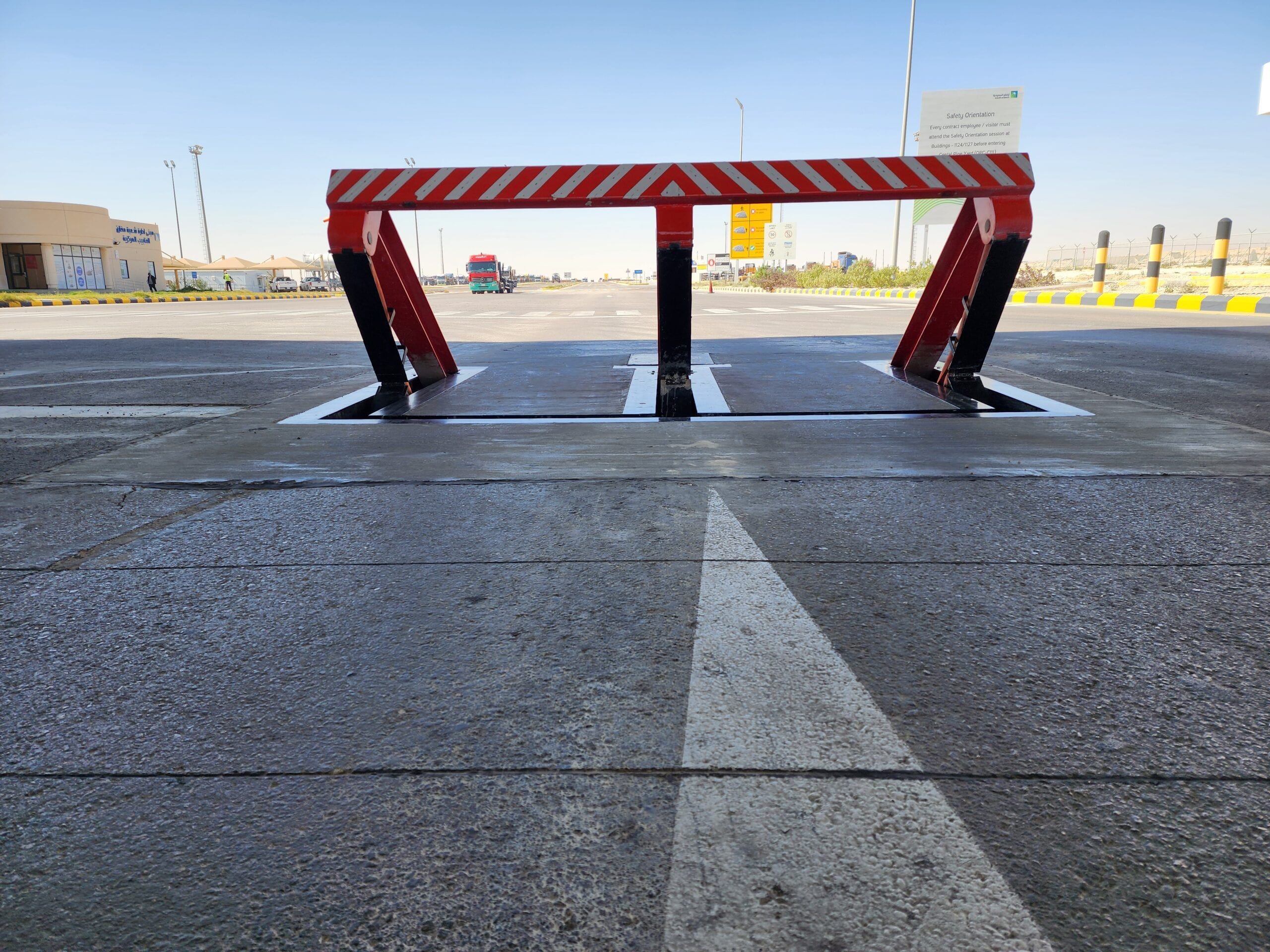
How Wedge Barriers Stop Vehicles in High Security Zones
When it comes to protecting sensitive facilities, few security measures are as effective as the vehicle wedge barrier. These heavy-duty systems are engineered to halt unauthorized vehicles by creating an impenetrable obstacle that rises from the ground in seconds. Unlike traditional roadblocks or bollards, wedge barriers are designed to withstand direct, high-speed collisions, making them a trusted solution for military bases, government sites, airports, and other critical infrastructures.
Understanding how wedge barriers function, what makes them strong, and why they are widely used in access control planning provides valuable insight into their role in modern security strategies. This guide will walk through their construction, crash-rated performance, and how they compare to alternative protective systems.
Wedge Barriers as a Vehicle-Stopping Solution
At their core, wedge barriers are designed to deliver immediate and uncompromising protection against vehicle-borne threats. When activated, the barrier rises from a flush position in the roadway to form a steep, reinforced wedge that blocks the path of any oncoming vehicle. Unlike roadside guardrails or energy-absorbing crash cushions, which are designed to reduce the severity of impact in accidental collisions, wedge barriers are constructed to stop vehicles outright. The result is a decisive halt that neutralizes hostile attempts before they can reach secure areas.
This rapid-stopping capability is essential in high-security environments where the stakes are highest. A single vehicle breach at a government facility, military base, or transportation hub can lead to severe consequences. By forcing a direct collision with a hardened steel plate anchored into a deep foundation, wedge barriers absorb and redirect the impact energy. This not only disrupts the vehicle’s momentum but ensures forward progress is completely eliminated.
Beyond their sheer stopping power, wedge barriers also serve a dual-purpose role in access control. Security teams can raise or lower the barrier as needed, allowing authorized vehicles to pass smoothly while maintaining a sealed perimeter against unauthorized entry. This combination of selective access and high-level crash resistance makes wedge barriers an indispensable element in layered security strategies, ensuring both operational flexibility and uncompromising defense.
Core Components of Wedge Barrier Systems
The strength of a wedge barrier does not come from a single feature, but from the way its core parts work in unison. Each element is engineered to play a specific role in stopping vehicles and ensuring the system can perform under extreme pressure. While the design may be adapted for different sites, three fundamental components define nearly every installation:
Barrier Plate – The steel plate is the most visible and critical part of the system. When activated, it rises at an angle to present a solid wall that vehicles cannot bypass or climb. The plate is typically built from reinforced, high-tensile steel, capable of withstanding tremendous force without deforming. Its geometry is carefully designed so that, during impact, energy is redirected downward into the ground rather than absorbed entirely at the point of contact. This not only maximizes stopping power but also extends the life of the barrier by reducing stress on the plate itself.
Hydraulic or Electro-Mechanical System – The power system drives the barrier’s movement, ensuring it can be deployed quickly in emergencies. Hydraulic systems are widely used because of their ability to generate immense force, allowing the barrier to lift heavy steel plates rapidly and lock them firmly into position. Electro-mechanical systems, on the other hand, offer advantages in environments where lower energy consumption, reduced maintenance, or quieter operation is preferred. Both systems can be integrated with access control technologies, allowing for seamless operation with keycards, sensors, or security personnel controls.
Foundation and Anchorage – Below the surface, the foundation provides the hidden strength of the wedge barrier. Typically constructed from reinforced concrete, it secures the barrier in place and distributes impact forces safely into the ground. Anchors are strategically embedded to keep the barrier from shifting or collapsing during a collision, even when struck by a heavy vehicle at high speed. The depth and size of the foundation vary depending on the site conditions, but shallow-mount options are also available when underground utilities or space limitations are present.
Together, these components form a system that is more than just a physical obstacle. The barrier plate provides the stopping force, the power system ensures rapid deployment, and the foundation delivers the stability to withstand repeated impacts. By combining mechanical strength with structural resilience, wedge barriers create a dependable line of defense that can operate effectively in the most demanding security environments.
Crash Resistance and Performance Ratings
Unlike speed bumps or traffic-calming devices, vehicle wedge barriers are engineered for a very different purpose: to stop vehicles dead in their tracks. To ensure they can perform under real attack conditions, they undergo strict crash testing and certification. The most widely recognized standards are ASTM F2656 and the U.S. Department of State (DoS) crash ratings, which measure a barrier’s ability to halt vehicles of varying sizes and speeds.
For example, an M50-rated barrier has been tested to stop a 15,000-pound truck moving at 50 mph. This rating is often required for government facilities, military bases, and embassies where the threat of deliberate ramming attacks is highest. Facilities with lower threat levels may opt for barriers with lower ratings. Still, mission-critical sites almost always rely on the highest levels of certification to ensure both compliance and peace of mind.
It’s important to note that a wedge barrier’s crash resistance is not determined by steel thickness alone. Installation quality, foundation design, and proper system calibration all play a role in how the barrier responds to impact. A poorly installed system may fail even if the barrier itself meets top-rated standards. That’s why professional engineering, correct hydraulic or electro-mechanical setup, and regular testing are essential to guarantee that the barrier performs as expected when it matters most.
Security Applications and Design Considerations
A wedge barrier system is most effective when carefully positioned at entry points that face the most significant risk of unauthorized vehicle access. Their strategic placement ensures that high-risk areas are immediately protected while still allowing controlled movement for authorized traffic. These barriers are widely used across various high-security environments, each with its unique operational needs and threat levels. Common applications include:
- Government Buildings and Embassies – These sites are prime targets for intrusion attempts, requiring barriers that guarantee no unauthorized vehicle can force its way through. Wedge barriers ensure secure perimeters while protecting staff and sensitive operations.
- Military Installations – Bases and defense facilities often face threats from heavy vehicles or VBIEDs. High-rated wedge barriers serve as frontline defenses at gates and checkpoints, ensuring vehicles are stopped before reaching restricted areas.
- Airports and Seaports – With high daily traffic, these hubs must strike a balance between security and efficiency. Wedge barriers enable smooth entry for approved vehicles while providing instant lockdown capability in the event of a threat, thereby keeping critical zones safe.
- Corporate Campuses and Data Centers – Businesses with valuable assets and sensitive data use wedge barriers to regulate entry points. Their quick deployment prevents vehicle ramming attempts while maintaining controlled access for employees and deliveries.
Design considerations vary depending on traffic volume, available space, and threat assessment. For example, shallow-mount wedge barriers are often chosen when underground utility lines prevent the installation of deep foundations, while heavy-duty models may be prioritized for frontline defense at high-risk facilities.
Comparing Wedge Barriers with Other Security Solutions
Security planners have several options for controlling vehicle access, including bollards, gates, drop arms, and road blockers, each suited to different threat levels and environments. What distinguishes wedge barriers is their crash-rated strength, capable of stopping heavy vehicles at high speeds, making them ideal for sites where failure is not an option. While other systems may deter or slow unauthorized vehicles, wedge barriers provide immediate, reliable stopping power, giving facilities both protection and operational control in high-risk scenarios.
- Bollards – These are effective for protecting pedestrian walkways, storefronts, or areas where vehicles must be slowed or restricted. Bollards provide a more aesthetic enhancement for surrounding infrastructure but can require more maintenance.
- Drop Arms – Often used at checkpoints, drop arms are reliable for managing traffic flow and restricting casual entry. Drop arms are not the ideal solution for heavy vehicle throughput as the standard cycle times are longer than a wedge barrier.
- Sliding or Swing Gates – Gates serve well for routine entry and exit but have slower deployment speeds and are more vulnerable to ramming attempts. They work best when paired with additional barriers that provide real crash resistance.
For locations where rapid activation and guaranteed stopping power are critical, wedge barriers are often the preferred choice. Their certified crash ratings and proven reliability make them a trusted solution where weaker systems could fail under pressure.
Enhanced Perimeter Safety with Black Security Products Wedge Barrier System
Protecting sensitive sites from unauthorized vehicle access requires solutions that are both strong and reliable. Wedge barriers offer a high-performance defense, combining rapid deployment with crash-rated stopping power while maintaining controlled access for authorized vehicles.
At Black Security Products (BSP), our wedge barrier systems are engineered to exceed industry standards, providing both durability and operational flexibility. From robust, hydraulically driven barriers capable of halting heavy vehicles to shallow-mount models suited for sites with space or utility constraints, BSP offers solutions designed to meet the specific demands of high-security environments.
BSP wedge barriers are more than a physical deterrent; they are a comprehensive perimeter security solution. As a trusted U.S.-based provider with headquarters in Houston, TX, and Kalispell, MT, as well as offices in Washington and Michigan, BSP specializes in both passive and active anti-ram systems. Contact us today to schedule a consultation, request a quote, or receive expert guidance on selecting, installing, and integrating barrier systems that keep your facility safe, secure, and fully operational.