

What to Ask Wire Mesh Fence Suppliers Before Signing a Critical Infrastructure Contract
Securing critical infrastructure sites such as water treatment plants, energy facilities, and government compounds requires fencing that serves as a primary line of defense. Poor supplier selection can lead to security breaches, compliance issues, and costly repairs. Modern perimeter security also relies on layered protection, often combining fencing with rapid deployment vehicle barriers since no single system is sufficient on its own.
This article outlines five key areas to evaluate when selecting a wire mesh fence supplier, focusing on quality, experience, supply chain reliability, and long-term support. In critical infrastructure, overlooking any of these factors can create serious security gaps that are difficult and expensive to correct later. A structured evaluation process helps ensure every decision strengthens both safety and operational resilience.
Certifications and Standards: The Non-Negotiable Starting Point
Before reviewing a single product specification, confirm whether your prospective wire mesh fence suppliers hold verified certifications for the type of work required for your project. Certifications are documents issued by independent bodies that verify that a product or process meets recognized performance and safety standards. In critical infrastructure, they are not optional extras. They are the baseline from which all other evaluations begin.
The most relevant verification frameworks include compliance with ASTM International testing standards, ISO 9001 quality management certification, and any regional or sector-specific requirements that apply to your site. For government or defense-adjacent installations, approval documentation for those specific use cases may also be required. The security fencing compliance standards guide provides a detailed breakdown of what these requirements look like in practice and how they apply across different facility types.
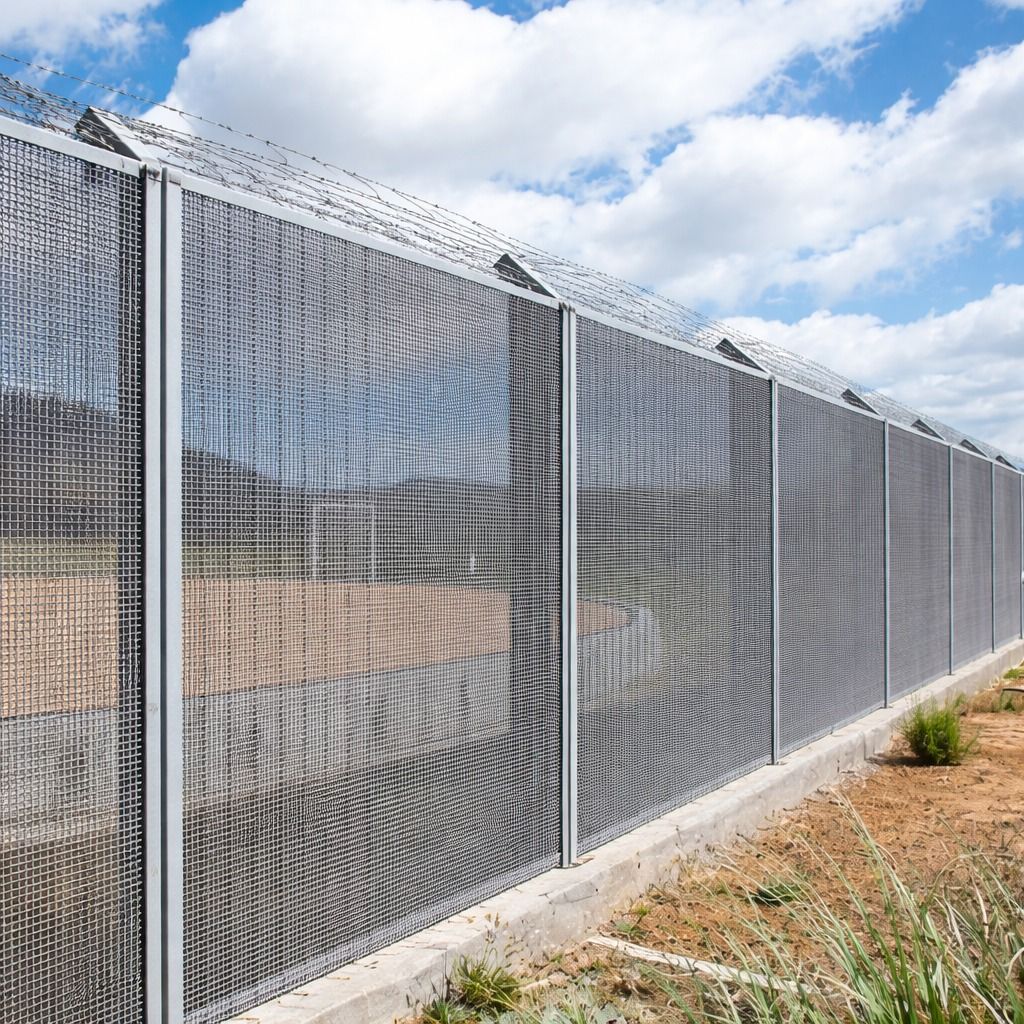
Beyond general standards, focus on certifications specific to high-security applications. A high security welded wire mesh fence used in critical infrastructure must meet far stricter requirements than residential or commercial fencing. Key areas to verify include:
- Anti-climb and anti-cut ratings that confirm intrusion resistance under tested conditions
- Compatibility with perimeter intrusion detection systems, known as PIDS, which are sensor-based systems that detect and alert on unauthorized boundary contact
- Documented compliance with ASTM F2781 or equivalent delay-rating standards for high-threat environments
- Approval records for government or defense-grade installations where required
A credible supplier will provide all of this documentation without hesitation. One who cannot is telling you something important about their production processes and project history. Because standards evolve alongside emerging threats and testing methods, ask whether the supplier actively monitors and adapts to compliance updates. A proactive compliance posture signals a long-term partner, not just a product vendor.
Materials and Manufacturing: Where Performance Is Built or Compromised
Certifications confirm that a product meets a standard. Materials and manufacturing processes determine whether it will continue to meet that standard over the full lifecycle of your installation. Wire mesh fence suppliers who cannot clearly explain their production methods should be treated with caution, regardless of their documentation.
The following specifications define the physical performance of any fencing system:
Wire gauge and mesh aperture size are the two most fundamental specifications to review. Wire gauge refers to the diameter of the individual wires that make up the mesh. Thicker gauges provide greater resistance to cutting tools, while smaller aperture openings reduce the ability to climb or grip the fence surface. Together, these two factors define the panel’s baseline physical security level.
Tensile strength is the maximum force a wire can withstand before fracturing. A steel-welded wire fence, defined as a rigid panel system created by machine-welding horizontal and vertical steel wires at every intersection, consistently outperforms woven alternatives in tensile strength because the welded joints distribute force across the full panel rather than concentrating it at individual wire crossings. Always request documented tensile strength data rather than verbal assurances.
Coating type determines long-term resistance to corrosion, UV degradation, and temperature cycling. Common options include hot-dip galvanization, PVC coating, and dual-coating systems that combine both. For sites near coastlines, industrial zones, or regions with extreme weather, coating selection directly affects how long the fence performs at specification without degradation or replacement.
Weld quality and construction method affect structural consistency across every panel in a production run. Machine-welded panels deliver more uniform joint strength than hand-welded alternatives, particularly across large orders. Ask whether weld integrity is tested per panel or assessed through batch sampling, and whether quality inspection is conducted in-house or by an independent third party.
For a detailed comparison of how material choices affect long-term perimeter performance, the guide on galvanized welded wire mesh fence systems covers the key variables that determine durability and resistance across different operating environments.
Evaluating Supplier Experience Through Critical Infrastructure References
Experience at the scale and security level of critical infrastructure is qualitatively different from general commercial fencing work. Wire mesh fence suppliers who primarily serve residential or light commercial markets may carry adequate products but lack the project management discipline, compliance knowledge, and integration experience that critical infrastructure demands. References bridge the gap between what a supplier claims and what they have actually delivered.
Request references from projects comparable in scope, security classification, and sector, ideally from energy, transportation, water treatment, or government environments. When speaking with those references, ask the following:
| Reference Checkpoint | What to Ask |
| Project Scale | Was the scope and complexity similar to your current project? |
| Timeline Adherence | Did delivery and installation occur on schedule, and how were delays handled? |
| Product Performance | Have there been any defects, failures, or corrosion issues post-installation? |
| Supplier Responsiveness | Was the supplier accessible and transparent during and after the project? |
| System Integration | Did the fencing integrate effectively with access control, surveillance, and vehicle barriers? |
Pay particular attention to how the supplier handled challenges rather than whether challenges occurred. Problems are inevitable in large infrastructure projects. Responsiveness, transparency, and resolution speed reveal far more about a supplier’s reliability than a clean track record on straightforward work. Wire mesh fence suppliers who hesitate to provide references or offer only contacts from low-complexity projects are signaling a lack of relevant experience.
Lead Times, Supply Chain Reliability, and Delivery Commitments
In critical infrastructure projects, schedule delays are not just inconvenient. They can create security gaps that require temporary mitigation measures and expose the facility to compliance risk. Before committing to any wire mesh fence suppliers, request a written breakdown of lead times from order confirmation through on-site delivery. For high-specification security mesh fencing systems, timelines range from 4 to 16 weeks, depending on volume, panel configuration, and coating requirements. A supplier who cannot provide a confident, documented estimate likely lacks visibility into their own production pipeline.
Supply chain reliability has become a critical differentiator across the industry. Evaluate your supplier’s preparedness for material disruptions by asking:
- Where raw steel materials are sourced, and how many alternative suppliers they maintain
- Whether buffer stock is available for high-demand panel specifications
- What contingency protocols exist when primary supply channels are disrupted
- How they communicate schedule changes to clients and what contractual remedies apply
Secure all delivery commitments in writing with milestone-based timelines and clearly defined terms for delays. While temporary measures can bridge short gaps in perimeter coverage, they are not a substitute for permanent fencing, and over-reliance on interim solutions creates its own operational and compliance risks.
Warranty Coverage, Maintenance Support, and Post-Installation Accountability
The supplier relationship does not end at installation. In critical infrastructure, it extends across the full operational life of the fencing system, which may span decades. Wire mesh fence suppliers who offer strong warranty terms, proactive maintenance programs, and defined service level agreements demonstrate a commitment to long-term performance rather than a transactional view of the project.
Warranty coverage should address material defects, weld integrity, and coating performance across the expected lifecycle of the installation. In critical infrastructure environments, coverage typically ranges from five to fifteen years, depending on materials and environmental conditions. Review exclusions carefully, particularly those related to environmental exposure, installation modifications, or third-party hardware integration, as these are common grounds for warranty claims being denied.
Maintenance support refers to the supplier’s capacity to provide scheduled inspections, preventive servicing, and repair response for damage or wear that develops over time. Like all perimeter infrastructure, fencing requires periodic evaluation to catch early signs of corrosion, fastener loosening, or structural deformation before they become breach risks. Ask whether the supplier offers a formal maintenance program or relies entirely on the client to self-manage post-installation performance. The guide on heavy duty welded wire fence panels covers how routine maintenance practices extend panel lifespan and preserve security performance.
Service level agreements (SLAs) are contractual commitments that specify response times, service levels, and escalation procedures for defects or failures. In critical infrastructure, an SLA should include emergency repair provisions that address perimeter breaches or structural failures within defined timeframes. Suppliers who cannot offer meaningful SLA terms are not structured to support the accountability that critical infrastructure security demands.
For context on how these post-installation considerations connect to broader compliance requirements, the security fencing compliance standards guide outlines the documentation and inspection practices that keep fencing systems aligned with regulatory expectations over time.
Choosing Wire Mesh Fence Suppliers Who Understand the Full Security Ecosystem
Selecting the right wire mesh fence suppliers for a critical infrastructure contract is a decision that shapes security performance, regulatory standing, and operational continuity for years after installation. Evaluating suppliers across certifications, materials and manufacturing quality, verified project experience, supply chain reliability, and post-installation support gives you a structured basis for comparison that goes beyond price and product claims.
Perimeter security at this level also depends on integration. Fencing that cannot work alongside vehicle barriers, access control systems, and surveillance infrastructure creates gaps that no individual component can close. Black Security Products designs and manufactures steel welded wire fence systems built for exactly this kind of integrated, standards-compliant deployment, from ASTM-certified SecureMesh panels for high-threat environments to complete perimeter strategies that combine physical barriers with access control and vehicle mitigation. If you are evaluating wire mesh fence suppliers for a critical infrastructure project and want to speak with a team that understands both the product and the broader security system it must support, get in touch with Black Security Products. For a deeper look at how to strengthen your overall perimeter approach, the guide on how to improve perimeter security is a practical starting point.
Building a Secure Foundation Through Smart Supplier Selection with Black Security Products
Selecting the right wire mesh fence supplier for a critical infrastructure project is a high-impact decision that directly affects security, cost, and long-term performance. As outlined in this article, it requires evaluating five key areas: certifications and compliance, material and manufacturing quality, proven project experience, supply chain reliability, and post-installation support. Each area reveals a different layer of supplier capability, and weaknesses in any one of them can create serious operational and security risks.
Perimeter protection also depends on a fully integrated approach, where fencing works alongside systems like portable vehicle barriers, access control, surveillance, and lighting. This is where Black Security Products becomes relevant, offering perimeter security solutions that support layered security and ensure stronger system integration across critical infrastructure environments. Choosing suppliers who understand this broader security ecosystem results in more resilient, future-ready site protection. Ultimately, the goal is to partner with providers who demonstrate reliability, transparency, and long-term accountability, well before any contract is signed.