

Types of Vehicle Barriers: Active, Passive and Anti Vehicle Barrier Systems Explained
Businesses and public facilities face increasing demands for reliable perimeter protection, especially as both accidental and intentional vehicle threats become more common. As you evaluate your security needs, you’ll notice that modern safety planning requires more than basic gates or simple barriers, it requires engineered solutions designed to stop, redirect, or control vehicles with precision. This is why understanding the different types of vehicle barriers is essential when building a comprehensive protection strategy that fits your layout, traffic patterns, and risk level.
Each barrier type serves a specific purpose, offering unique advantages depending on how your facility operates and what threats you must prepare for. When you learn how systems like a vehicle barrier, an anti ram vehicle barrier, or various active vehicle barriers and passive vehicle barriers function, you gain the insight needed to choose the right combination for each zone. With the correct setup, your perimeter becomes more predictable, more resilient, and better equipped to safeguard people, structures, and high-value assets under everyday conditions and during unexpected events.
The Different Types of Vehicle Barriers and When to Use Each One
Choosing among the many types of vehicle barriers begins with understanding how each option functions under daily use and during emergency situations. Within this single category, you will find active, passive, and impact-rated designs that serve different roles in a layered security strategy. Active systems are built for movement and real-time access control, passive systems create long-term structural defense, and impact-rated systems deliver high-force stopping capability. Reviewing the unique strengths of each helps you determine when, and where, to use them.
A. Active Vehicle Barriers: Facilities that handle frequent traffic benefit from active vehicle barriers, which open and close based on access rules. These systems support credential scanning, timed entries, or operator-controlled movement, making them ideal for secure checkpoints or delivery lanes. Among the most reliable active solutions are wedge barriers, known for rapid deployment and exceptional strength. These heavy-duty structures stay flush with the ground until activated, making them suitable for government buildings, military sites, and other high-security locations.
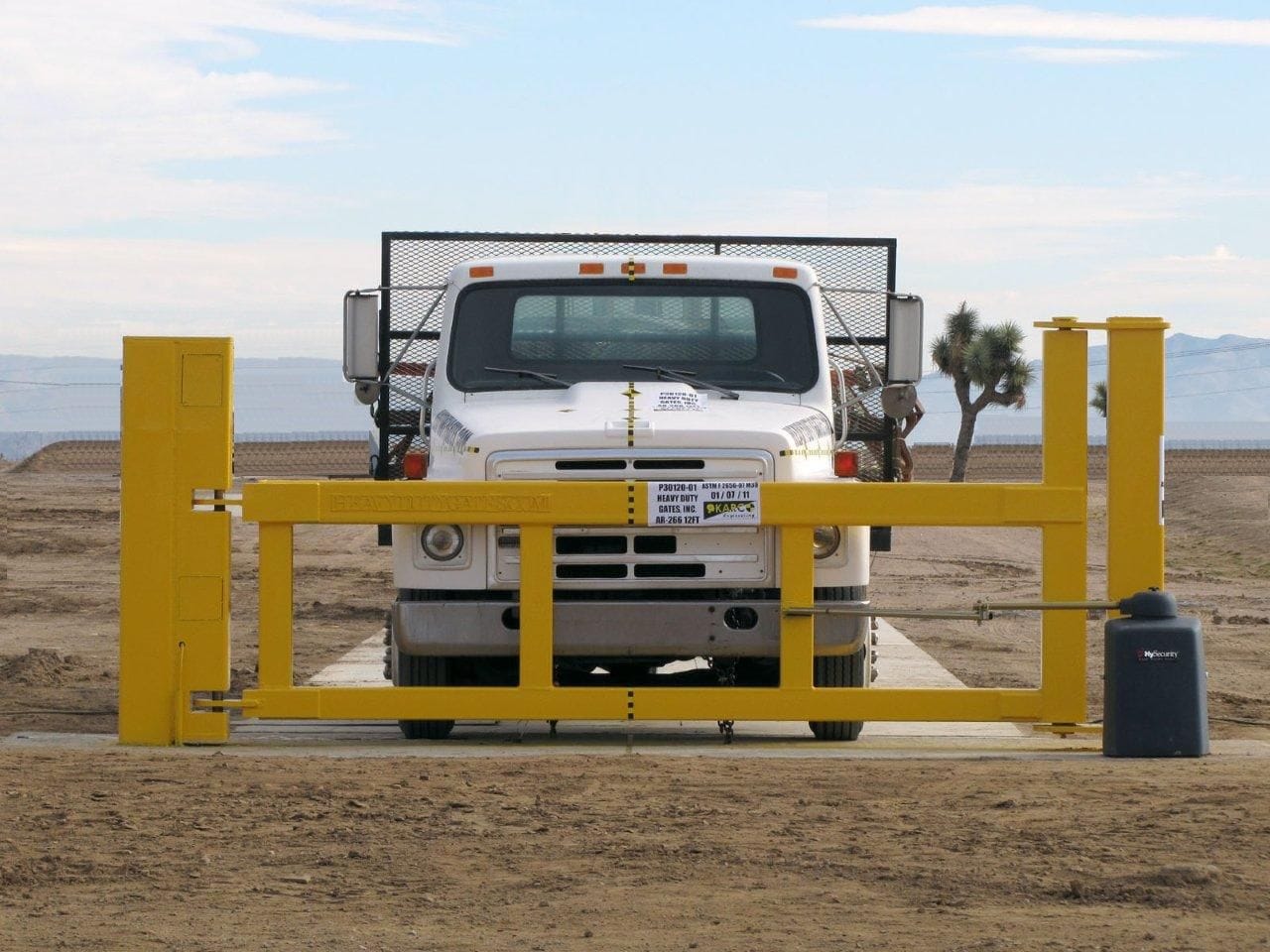
Other active solutions include anti-ram crash gate barriers, which combine the convenience of gate operation with strong impact resistance. These barriers work well at access points requiring both movement and force absorption, such as secure parking facilities or restricted zones. A flexible option for mixed-use spaces is the retractable or rising bollard system. This type of vehicle barrier retracts below ground when access is approved and rises to full height to block vehicles, making it ideal for hotels, plazas, or walkways that occasionally permit vehicles.
| Active Barrier Type | Best Use Scenarios |
| Wedge Barriers | High-risk entry points, government and military perimeters |
| Anti-Ram Crash Gate Barriers | Secure access lanes with controlled movement |
| Rising Bollards | Mixed-use pedestrian zones needing occasional vehicle access |
B. Passive Vehicle Barriers: For locations requiring constant, no-movement protection, passive vehicle barriers provide essential long-term defense. These systems remain fixed in place, providing continuous structural reinforcement whether or not an operator is present. They are commonly used to protect storefronts, building perimeters, utilities, and data centers, especially where vehicles may approach at dangerous speeds. Their reliable strength makes them a foundational component of many security plans.
One of the most recognized passive options is the street-style bollard barrier, which blends seamlessly into public walkways, plazas, and retail areas. These bollards can be arranged aesthetically without drawing attention to their protective purpose. Other passive systems include fixed anti-ram posts and reinforced perimeter defenses that create a permanent obstacle capable of redirecting or stopping vehicles. Their effectiveness in preventing vehicle intrusion makes them essential for critical facilities.
| Passive Barrier Type | Best Use |
| Street-Style Bollard Barriers | Pedestrian zones, storefronts, sidewalks |
| Fixed Anti-Ram Barriers | Utilities, airports, data centers |
| Reinforced Foundations | Large perimeters and high-speed approach areas |
C. Impact-Rated / High-Force Barriers: Impact-rated structures represent some of the most durable types of vehicle barriers, designed to withstand aggressive or high-speed vehicle attacks. When selecting barriers for high-threat zones, certified systems such as an anti ram vehicle barrier provide assurance that the structure can absorb and stop a vehicle traveling at a specific speed and weight. This rating is essential for government facilities, embassies, stadiums, and other high-exposure areas.
Crash-rated bollards and reinforced gates are also part of this category, offering high-force resistance in environments where both access control and impact protection are required. These systems undergo extensive crash testing under ASTM or PAS standards to verify their performance in real-world conditions. Facilities that rely on impact-rated systems benefit from predictable, tested stopping power that supports both safety and compliance requirements.
| Impact-Rated Type | Best Use |
| Anti Ram Vehicle Barrier | High-threat government or industrial sites |
| Crash-Rated Bollards | Stadiums, event spaces, transportation hubs |
| Reinforced Gates | Facilities balancing strong access control with impact resistance |
How Vehicle Barriers Protect Modern Facilities
Vehicle mitigation systems have evolved significantly as properties face increasing exposure to traffic risks, high-speed approaches, and evolving threat behavior. The range of types of vehicle barriers now available enables facilities to address both everyday access management and extreme-force scenarios with precision. These systems help organize entry points, reduce bottlenecks, and maintain predictable vehicle patterns even during peak activity hours. By choosing well-designed systems, you ensure that movement remains controlled and safety remains consistent.
Another critical function of a vehicle barrier used today is their ability to reduce liability and prevent accidental damage. A well-placed vehicle barrier can stop unauthorized entry, protect pedestrians, and shield storefronts or building facades from unintended collisions. Facilities that manage mixed environments, such as walkways, loading zones, or public plazas, benefit from solutions that clearly separate pedestrian and vehicle areas. This clarity minimizes confusion and creates a safer, more organized environment for both employees and visitors.
The most advanced types of vehicle barriers also support high-risk environments where impact resistance is essential. Security-focused designs such as anti-ram crash gate barriers, fixed bollards, and rated crash systems help protect areas with heightened threat exposure. When paired with access-controlled systems, these solutions form a layered defense approach that supports both operational needs and long-term physical protection. Understanding these roles helps you choose barriers that align with your overall site goals.
Comparing Barrier Strength, Ratings, and Performance Standards
Understanding how barrier ratings work is essential when selecting the right protection for any facility. Crash tests, certification requirements, and performance evaluations help determine how reliably a barrier can stop or redirect a moving vehicle under real-world conditions. When you examine these standards closely, you gain the insight needed to match each system to your risk level, traffic exposure, and overall security goals.
- Crash Ratings Determine How Barriers Perform Under Impact: Crash ratings show how well a barrier can stop or redirect a fast-moving vehicle. These ratings come from controlled tests that mimic real threats and follow ASTM, DOS, or PAS standards. Choosing barriers with verified ratings gives you confidence that the system can handle the specific risks around your facility.
- Impact-Rated Barriers Offer Proven Protection for High-Threat Zones: Impact-rated solutions, such as an anti ram vehicle barrier or certified crash-rated bollards, are engineered for high-speed or high-force threat zones. Each vehicle barrier in this category is tested for impact speed, vehicle weight, and penetration depth to ensure predictable stopping performance. Facilities near busy roads, pedestrian zones, or sensitive buildings benefit most from integrating a high-rated vehicle barrier into their outer security layer.
- Active Barriers Require Performance Testing Beyond Impact Strength: Active barriers operate differently from fixed systems, so each vehicle barrier is tested for cycle speed, mechanical reliability, and response accuracy. These evaluations confirm that the barrier opens and closes smoothly throughout the day. When paired with passive or impact-rated systems, active barriers help maintain efficient traffic flow and strong perimeter control.
- Matching Ratings to Your Facility’s Risk Level Improves Long-Term Protection: Performance standards help you choose the right vehicle barrier for your specific environment. Lower-risk areas may only require moderate-rated systems, while high-threat locations need fully certified impact protection. Understanding these ratings allows you to build a layered setup where active, passive, and impact-rated barriers work together for long-term security.
Evaluating barrier strength and crash ratings is a crucial part of building a reliable security plan. Certification standards, performance tests, and real-world impact data help you determine how well each system can protect people, property, and high-risk areas. By comparing these ratings carefully and selecting barriers that match your risk profile, you ensure that every component of your perimeter performs exactly as intended—both in daily operation and during unexpected threat events.
Choosing the Right Barrier Based on Your Facility’s Traffic and Threat Level
The most effective security plans begin with identifying your daily traffic patterns and exposure to potential threats. Facilities managing frequent deliveries or controlled staff entry benefit from active vehicle barriers, which provide flexible movement while maintaining security. In comparison, properties exposed to high-speed roadways or open traffic access points require stronger, fixed solutions that stay active at all times. Matching the right types of vehicle barriers to each area ensures that your perimeter remains both functional and secure.
High-risk facilities often require a combination of passive defenses and impact-rated systems. For example, a data center may rely on fixed passive vehicle barriers around the outer perimeter, while using controlled anti-ram crash gate barriers at designated entry points. This layered approach ensures that speed, force, and unauthorized access attempts are addressed through multiple levels of protection. Many facilities work with manufacturers like Black Security Products (BSP) to evaluate which configurations meet their operational realities, allowing each zone to receive the level of reinforcement it needs. Clearly defining each area’s purpose makes it easier to deploy the right types of vehicle barriers in the correct order.
Public spaces, campuses, and pedestrian-heavy environments often prioritize solutions that blend seamlessly with their surroundings. Street-style bollard barriers offer subtle protection without compromising aesthetics. Meanwhile, retail districts or event venues benefit from mixing retractable systems with fixed bollards to support occasional vehicle passage. The more accurately you assess your operations, the better your overall selection of types of vehicle barriers will perform in the long run.
Building Stronger, Safer Facilities Through Smarter Vehicle Barrier Planning
The role of modern vehicle barrier systems has become essential in today’s security landscape, protecting people, assets, and high-risk environments while keeping daily operations running smoothly. A well-engineered design goes beyond basic compliance, it reflects a proactive commitment to safety, innovation, and long-term resilience. Whether you’re managing routine traffic or preparing for unexpected threats, a strategic combination of passive vehicle barriers, active vehicle barriers, and high-impact anti ram vehicle barrier systems ensures your perimeter remains strong, responsive, and capable of adapting to evolving risks.
At Black Security Products (BSP), we engineer and deliver vehicle barrier solutions built to meet the demanding requirements of commercial, industrial, and government facilities. From reinforced passive vehicle barriers that provide continuous protection to automated active vehicle barriers that deliver fast, controlled access management, every system reflects precision engineering and rigorous performance testing. By combining structural durability, intelligent monitoring options, and long-term maintenance support, BSP ensures each solution performs consistently and grows with your operational needs. Partner with BSP to build a perimeter strategy that evolves with your environment and secures the spaces that matter most, today and into the future.