

How a Portable Anti-Ram Barrier Protects Temporary Events and Soft Targets
Large public events face growing security challenges as concerts, festivals, sports venues, and political gatherings continue attracting large crowds in open environments. These locations are considered soft targets because they are publicly accessible and difficult to secure with permanent infrastructure. A portable anti ram barrier helps reduce these risks by creating a physical layer of protection against unauthorized vehicle access while supporting safe pedestrian movement.
Security teams rely on a portable anti ram barrier because it can be transported, deployed quickly, and removed after operations end without major construction work. Unlike permanent systems, portable barriers provide flexible protection for temporary checkpoints, public entrances, and restricted zones. For event organizers, municipalities, and critical infrastructure operators, these systems deliver practical vehicle mitigation capabilities that adapt to changing security conditions.
Understanding Portable Anti Ram Barrier
A portable anti ram barrier is a movable vehicle stopping system designed to prevent unauthorized vehicles from entering protected areas. These systems are commonly deployed at temporary events, government operations, emergency response zones, and public gathering spaces.
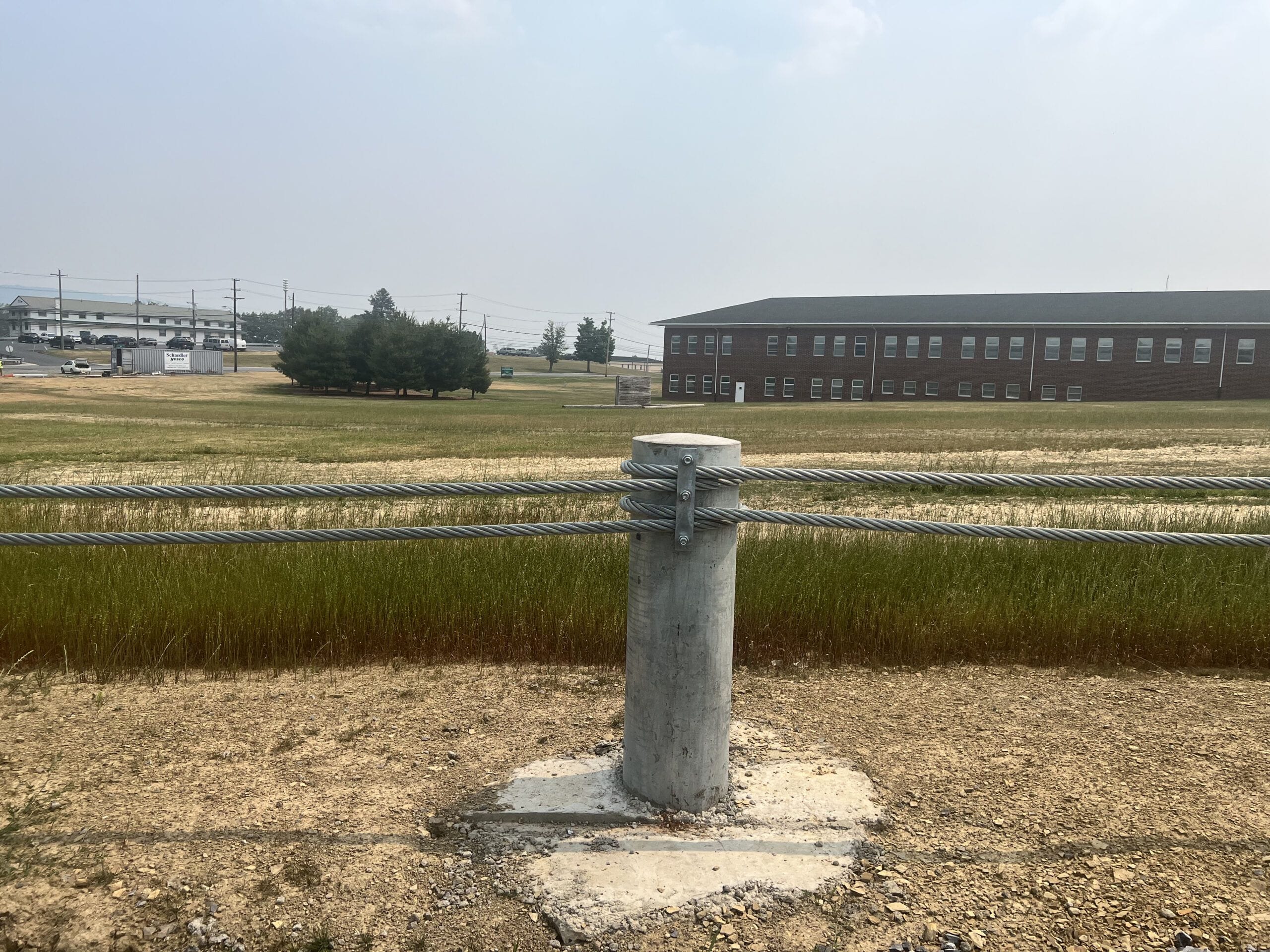
Unlike fixed perimeter security equipment, a portable anti ram barrier can be installed without deep foundations or permanent excavation. Most systems use interlocking steel components, reinforced frames, or tension-based stopping mechanisms to absorb vehicle impact.
Several barrier designs are available depending on the level of protection required:
- Surface-mounted barriers for rapid deployment
- Mobile trailer-based systems for temporary checkpoints
- Folding gate systems for controlled access lanes
- Net-based systems that stop vehicles while reducing occupant injury
- Steel beam systems designed for heavy vehicle mitigation
Many organizations also rely on rapid deployment vehicle barriers when they need security infrastructure that can be installed within hours instead of weeks. These systems are especially useful during emergencies, large civic events, and temporary military operations.
According to the U.S. Department of Homeland Security, hostile vehicle mitigation is a critical part of modern urban security planning. Vehicle attacks remain one of the most common physical threats to crowded public areas.
Why Temporary Events and Soft Targets Need Vehicle Protection
Soft targets are locations with large populations and limited perimeter security. Examples include outdoor concerts, parades, sports stadiums, transit hubs, and festival grounds. These areas often experience high pedestrian traffic and multiple vehicle access points.
A portable anti ram barrier helps security teams control these vulnerable zones without disrupting public movement. The visible presence of barriers also acts as a deterrent. Attackers are less likely to target areas protected by strong physical defenses.
Temporary events face unique challenges because layouts change frequently. Organizers need to secure:
- Vendor access roads
- Emergency response lanes
- VIP entrances
- Loading docks
- Public pedestrian crossings
- Temporary parking areas
Many event managers choose a modular vehicle barrier system because modular systems can adapt to changing site conditions. A modular vehicle barrier system is a security solution built from interchangeable components that can expand, reconfigure, or relocate as operational needs evolve.
Federal guidance from the Cybersecurity and Infrastructure Security Agency recommends layered vehicle mitigation for crowded public spaces. These recommendations emphasize flexible security infrastructure that can respond to dynamic threat conditions.
How Portable Barrier Systems Protect Crowded Areas
A portable anti ram barrier protects crowded spaces by slowing, redirecting, or completely stopping unauthorized vehicles before they reach pedestrians. These systems create a controlled buffer zone between vehicle traffic and public gathering areas.
The effectiveness of a portable anti ram barrier depends on several factors:
| Protection Factor | Security Benefit |
| Impact resistance | Stops hostile vehicles at speed |
| Rapid installation | Allows fast response during events |
| Modular configuration | Adjusts to changing layouts |
| Traffic integration | Maintains emergency access |
| Visible deterrence | Discourages hostile actions |
Barrier placement is just as important as barrier strength. Security planners often position systems near choke points, intersections, and high-density pedestrian areas. Many cities now use crash rated vehicle barriers during major public events. Crash rated vehicle barriers are protective systems tested under standards such as ASTM F2656 to measure their ability to stop vehicles traveling at specific speeds.
A layered security design include:
- Bollards at pedestrian entrances
- Mobile barriers near staging zones
- Security fencing around restricted areas
- Access control checkpoints for delivery vehicles
- Surveillance systems connected to emergency response teams
The National Counterterrorism Security Office notes that visible hostile vehicle mitigation measures significantly improve public safety in crowded environments.
Rapid Deployment Matters During Emergencies
Speed is essential when responding to evolving threats. Temporary events often require security infrastructure that can be installed with little warning. A portable anti ram barrier gives response teams the ability to establish protection quickly without waiting for permanent construction.
Emergency planners frequently use a portable anti ram barrier during:
- Political demonstrations
- Disaster response operations
- Public celebrations
- Law enforcement checkpoints
- Emergency evacuations
- Temporary road closures
In these situations, setup time directly affects public safety. Traditional concrete barriers may require heavy machinery and extensive labor. Portable systems reduce installation complexity while maintaining strong stopping capability. Many agencies rely on rapid deployment vehicle barriers because these systems can be transported efficiently and assembled in a short period. Rapid deployment vehicle barriers are especially valuable when security conditions change unexpectedly.
The best portable systems also support operational continuity. Security personnel can create controlled traffic lanes while maintaining access for emergency vehicles, delivery teams, and authorized staff. Another important factor is scalability. Security teams can expand barrier coverage as crowd sizes increase. This flexibility helps organizers adjust protection levels throughout the event.
Benefits of a Modular Security Approach
Modern security planning requires adaptability. Every event location presents different risks, crowd patterns, and access requirements. A portable anti ram barrier supports this flexibility because it can be repositioned and reconfigured as needed.
Many organizations prefer a portable anti ram barrier because it supports long-term operational efficiency. Instead of investing in permanent infrastructure for every location, teams can move the same equipment between multiple sites.
A flexible security layout offers several advantages:
Lower Infrastructure Costs: Portable systems reduce the need for excavation, foundation work, and permanent installation expenses.
Faster Site Adaptation: Security teams can redesign barrier layouts to match changing crowd flow and traffic conditions.
Improved Storage and Transport: Many portable systems are engineered for compact transport and efficient storage between deployments.
Better Operational Coverage: A modular vehicle barrier system can secure narrow streets, open plazas, temporary checkpoints, and restricted loading zones with the same core equipment.
Security professionals also value the maintenance advantages of a modular vehicle barrier system. Damaged sections can often be replaced individually instead of removing the entire structure. In high-risk environments, mobility matters just as much as stopping power. Portable solutions allow organizations to strengthen protection without sacrificing operational flexibility.
Choosing the Right Barrier for Temporary Security Operations
Not every barrier system is designed for the same threat level. Security planners must evaluate crowd density, vehicle access, site layout, and operational goals before selecting equipment. A portable anti ram barrier should always match the risk profile of the event. High-traffic urban gatherings may require stronger systems than low-density community events.
The following table highlights common considerations:
| Consideration | Why It Matters |
| Crash certification | Confirms tested stopping capability |
| Deployment speed | Supports emergency operations |
| Site portability | Improves transport efficiency |
| Access integration | Maintains controlled traffic flow |
| Environmental durability | Supports outdoor use in harsh conditions |
| Modular design | Allows scalable protection |
Many government facilities and transportation hubs now install crash rated vehicle barriers to strengthen temporary and permanent access control points.
Security planners should also consider operational integration. A barrier system works best when combined with:
- Access control systems
- Surveillance cameras
- Traffic management plans
- Emergency response coordination
- Trained security personnel
Some organizations choose a modular vehicle barrier system because it supports phased deployment. Teams can begin with basic perimeter coverage and expand security layers over time. In high-threat environments, choosing tested and certified systems is essential. ASTM-rated barriers provide measurable performance standards that support informed security planning.
Proven Vehicle Mitigation Is Critical for Temporary Event Security
Temporary events and crowded public spaces require more than visible deterrents. Security teams need vehicle mitigation systems that deliver verified stopping capability under real-world threat conditions. As cities, transportation agencies, and private organizations continue strengthening public safety strategies, flexible perimeter protection has become a critical part of modern event security planning. A portable anti ram barrier provides the mobility and rapid deployment capabilities needed to secure changing environments without sacrificing protection performance.
At Black Security Products, we provide advanced perimeter security solutions engineered for high-risk operational environments. Our portfolio includes rapid deployment systems, mobile perimeter protection technologies, access control solutions, and crash tested barrier systems designed to support government, defense, critical infrastructure, and public event security requirements. From temporary venue protection to long-term hostile vehicle mitigation planning, BSP delivers security solutions built for operational reliability, deployment flexibility, and proven performance in demanding environments.