

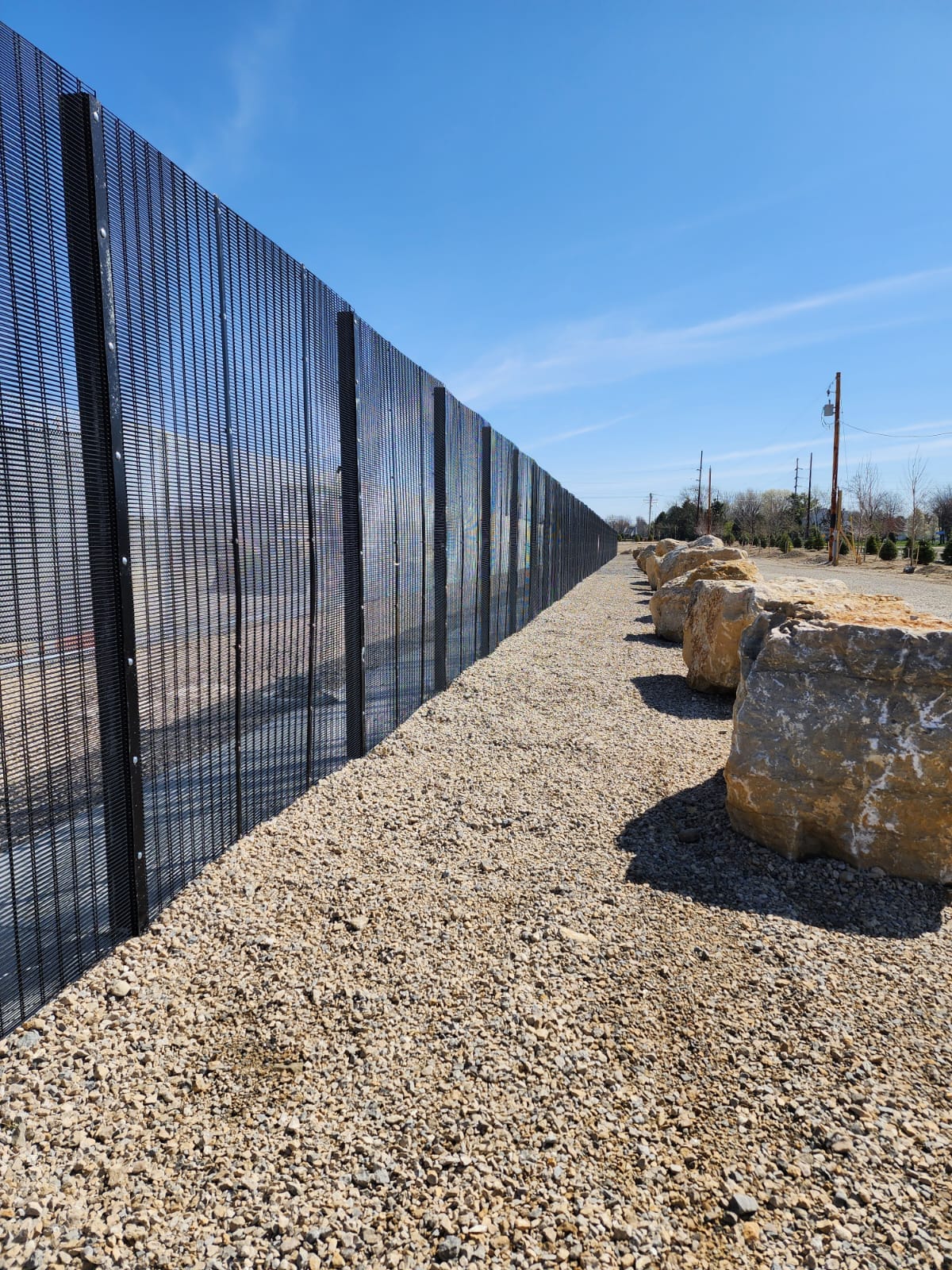
Data Center Perimeter Security: Fencing, Vehicle Barriers and Access Control
When people think about data center security, they usually think about firewalls, encryption, and software defenses. But physical threats can bypass even the most advanced digital systems if the outer boundary is left vulnerable. Data center perimeter protection refers to the layered physical security measures that safeguard a facility’s outer boundary, preventing threats from reaching critical infrastructure.
A strong perimeter strategy combines fencing, vehicle barriers, access control, and real-time surveillance into a unified system designed to detect, delay, and deny unauthorized access.
Why the Perimeter Is Your First and Most Critical Line of Defense
Effective data center perimeter protection starts at the edge of your property, not at your front door. The outermost boundary is your earliest opportunity to intercept any unauthorized access attempt before it escalates. A well-defined perimeter sends a clear visual signal that the site takes security seriously. That deterrent effect alone stops many opportunistic threats before they develop. A clearly marked and secured perimeter also supports compliance with frameworks such as SOC 2 and ISO 27001, which both require documented physical security boundaries.
The foundation of a strong perimeter is the defense-in-depth model, which structures protection in concentric zones moving inward toward the most sensitive areas. Each zone requires a higher level of authorization, naturally slowing unauthorized movement through the facility. When one zone is tested, others remain intact, buying security teams critical time to detect and respond.
| Security Zone | Access Level | Typical Controls |
| Zone 1 – Outer Perimeter | Public boundary | Fencing, signage, lighting |
| Zone 2 – Controlled Access | Authorized personnel | Guard booths, vehicle barriers |
| Zone 3 – Restricted Interior | Cleared staff only | Key card, biometric readers |
| Zone 4 – Critical Core | Highest clearance | Mantrap, dual authentication |
According to the Uptime Institute facility security review framework, a thorough physical security evaluation examines all access points, camera placement, recording coverage, and security access policies throughout the entire facility, not just the server room. Treating the perimeter as a living system rather than a one-time installation is what keeps data center perimeter protection genuinely effective. Facility managers should schedule formal perimeter audits at least twice per year to identify emerging weaknesses, such as fence gaps, lighting failures, or camera blind spots.
Choosing the Right Security Fencing System for a Data Center
Selecting the right security fencing is one of the most consequential decisions in data center perimeter protection. The fence is the most visible and continuous physical barrier on the property. A wrong choice creates a dangerous false sense of security. Every selection should begin with a thorough threat assessment that considers location, asset value, and regulatory requirements. From there, material, height, mesh aperture, and wire gauge become the critical specifications that determine real-world performance.
The most widely specified perimeter security fencing systems for critical infrastructure facilities include:
- Welded Wire Mesh Panels: Rigid, cut-resistant construction with open sightlines that support camera integration. Well-suited for both urban and industrial environments.
- High Security Palisade Fencing: Vertical steel pales with pointed or hooked tops that resist climbing, cutting, and forced entry. Widely specified for critical infrastructure sites requiring strong physical deterrence.
- Anti-Climb Fencing: Narrow aperture and smooth vertical surfaces that eliminate footholds entirely. Highly effective in high-foot-traffic urban locations.
- Expanded Metal Fencing: One-piece rigid construction with no welded joints that can be exploited as weak points. Offers strong resistance to deformation and cutting.
- Electric Security Fencing: Delivers a non-lethal deterrent shock on contact while simultaneously triggering an alarm. Adds an active detection layer directly to the physical barrier.
Understanding palisade fencing design and benefits is particularly valuable for data center operators. High security palisade fencing uses reinforced steel posts and tamper-resistant fixings to create a barrier that is difficult to cut, climb, or force open. For higher-risk environments, LPS 1175 SR2 certification or above is a common performance benchmark, positioning the fence as a tested, measurable security asset rather than just a boundary line.
Vehicle and Crowd Barriers: Blocking Physical Intrusion and Impact
Vehicle-borne threats are consistently underestimated in data center perimeter protection planning. A determined attacker can breach a standard fence with a vehicle in seconds. Crash-rated bollards address this risk by absorbing and redirecting impact force. Standards such as ASTM F2656 and PAS 68 are key benchmarks for verifying barrier performance. Choosing barriers without verified crash ratings introduces unnecessary and avoidable risk.
Beyond bollards, layered vehicle barrier systems strengthen protection across all access points. Active vehicle barrier solutions include retractable barriers for controlled vehicle entry, wedge barriers for high-threat access points, and drop arm systems for facilities with frequent authorized traffic. Jersey barriers and reinforced planters can serve a dual function as both security measures and site design elements. Security berms provide passive, low-maintenance perimeter protection without requiring powered infrastructure.
Combining multiple barrier types creates a more resilient defense than relying on any single system. Different entry points carry different risk profiles, and the barrier selection for each should reflect those differences.
Pedestrian control deserves equal attention. Unauthorized foot traffic enables tailgating, social engineering, and reconnaissance, all of which can undermine more sophisticated systems downstream. Turnstiles, swing gates, and speed lanes regulate access at pedestrian entry points. Clear boundary signage reinforces where the controlled zones begin, shifting the posture from reactive to proactive.
Managing Entry Points with Data Center Access Control Systems
Access control is the bridge between physical barriers and human oversight in data center perimeter protection. A single unmonitored entry point can undermine an otherwise well-designed perimeter. Effective access control verifies identity, tracks movement, and creates an auditable record of every entry and exit event.
The NIST physical access control guidelines define physical access controls as restrictions on the entry and exit of personnel from controlled areas, requiring controlled barriers, entry points within those barriers, and screening measures at each entry point. These requirements apply directly to data center environments.
The most widely implemented access control components in critical facility environments are:
- Key Card and Proximity Readers: Electronic credentials that grant or deny access at perimeter gates, creating a digital log of every entry and exit event.
- Biometric Verification Systems: Fingerprint, iris, or facial recognition scanners that confirm identity beyond what a card or PIN alone can establish.
- Mantraps and Security Airlocks: Enclosed entry chambers that allow only one person through at a time, physically preventing tailgating at high-security transition points.
- Guard Booths and Staffed Checkpoints: Manned stations at primary vehicle and pedestrian entry points that provide real-time human judgment alongside automated systems.
- Visitor Management Platforms: Digital systems that pre-register, track, and time-limit visitor access, ensuring no unauthorized individual moves freely through the perimeter.
- Two-Factor Authentication Protocols: A layered verification requirement combining something the user has, such as a key card, with something they are, such as a biometric scan.
Effective implementation requires minimizing the number of entry points, since each one adds potential vulnerability. Access control systems should integrate with surveillance and alarm systems in real time, triggering immediate alerts on failed access attempts. A well-designed system not only restricts entry but creates a forensic data trail that supports rapid incident response.
Surveillance and Detection: Monitoring the Perimeter in Real Time
Surveillance and detection systems are the active intelligence layer of data center perimeter protection. Physical barriers delay threats. Real-time monitoring ensures those threats are identified and responded to before a breach is complete. Without active surveillance, even strong fencing and barriers become passive and reactive. Investing in integrated surveillance as part of your perimeter security solutions turns a static perimeter into a responsive, adaptive defense.
| Technology | Primary Function | Key Benefit |
| CCTV Camera Systems | Continuous visual monitoring of perimeter zones | Provides real-time footage and recorded evidence |
| Perimeter Intrusion Detection Systems (PIDS) | Detects physical contact or movement along fencing | Triggers alerts before a full breach occurs |
| Thermal Imaging Cameras | Detects heat signatures in low-light conditions | Effective at night and in adverse weather |
| Video Analytics Software | Automatically flags suspicious behavior patterns | Reduces false alarms and sharpens response accuracy |
| Microwave and Infrared Sensors | Creates invisible detection fields along the perimeter | Detects movement without requiring physical contact |
| Perimeter Lighting Systems | Eliminates concealment opportunities | Deters intrusion and supports camera performance |
Strategic camera placement is essential. Coverage should eliminate blind spots at fencing lines, vehicle entry points, and zone transition areas. Overlapping fields of view ensure that no gap is left unmonitored. Video analytics and properly positioned lighting work together to automate the detection of unusual behavior, reducing the burden on security staff and improving response times. All detection systems must be backed by clear escalation protocols so that alerts translate immediately into coordinated action.
Reviewing palisade fencing types alongside your surveillance plan helps ensure that fencing choices and camera placement are designed together. Certain fencing profiles improve sightlines for fixed cameras, while others reduce visual obstruction for thermal imaging.
How Perimeter Systems Protect Critical Infrastructure Beyond Data Centers
The principles of data center perimeter protection apply broadly to any facility housing critical assets. Security fencing for critical infrastructure in utility, power, and industrial environments follows the same layered logic: define boundaries, control access, detect intrusion, and delay breach. The same vehicle barrier standards, fencing specifications, and access control frameworks used in data centers are deployed across substations, water treatment facilities, and government campuses.
For data center operators, this cross-sector relevance is an important context. It confirms that the perimeter security systems available are mature, field-tested, and proven under demanding real-world conditions. It also means that when regulatory frameworks require documented physical protection, the products and processes to meet those requirements already exist and are commercially available.
Reviewing resources on data center physical security trends also reveals a growing convergence between physical and digital security, where integrated systems share data in real time and allow a single platform to coordinate fencing alerts, access control logs, and surveillance footage simultaneously.
Building a Resilient Strategy for Data Center Perimeter Protection
Data center perimeter protection is most effective when every component is part of a fully integrated strategy. Fencing, barriers, access control, and surveillance must be designed to work together, not as independent systems that happen to share a property boundary. A gap in any one layer creates a path that a capable adversary will identify and exploit.
The defense-in-depth model remains the most reliable framework for structuring these components. Each zone from the outer fence line to the server room floor requires proportionate controls. As threats evolve and infrastructure scales, the perimeter strategy must be reviewed and updated to match. Organizations that treat their perimeters as set-and-forget installations consistently face avoidable vulnerabilities.
For facilities that require certified, tested, and scalable perimeter protection, working with a specialist manufacturer ensures that every system, from the fencing specification to the vehicle barrier selection, is engineered for the specific threat environment. The right partner brings not just products but threat assessment expertise, regulatory knowledge, and integration capability.
Creating a Stronger Future for Data Center Perimeter Protection with Black Security Products
Data center perimeter protection provides dependable security for facilities that house critical digital infrastructure. A layered approach combining perimeter security fencing, crash-rated barriers, access control, and real-time surveillance ensures that threats are detected, delayed, and denied before they reach sensitive systems. High security palisade fencing and other engineered systems are built to resist intrusion, withstand environmental stress, and maintain long-term structural performance, making them essential for high-risk environments.
For maximum effectiveness, these systems should be implemented as part of fully integrated perimeter security solutions that align fencing, barriers, access control, and detection into a unified strategy. Black Security Products is a Houston, Texas-based designer and manufacturer of engineered perimeter protection systems. Our solutions are developed to support industrial and high-security applications where reliability and performance are critical. Whether deployed as standalone perimeter security fencing or as part of a multi-layered defense framework, these systems deliver scalable protection, operational consistency, and long-term security confidence.