

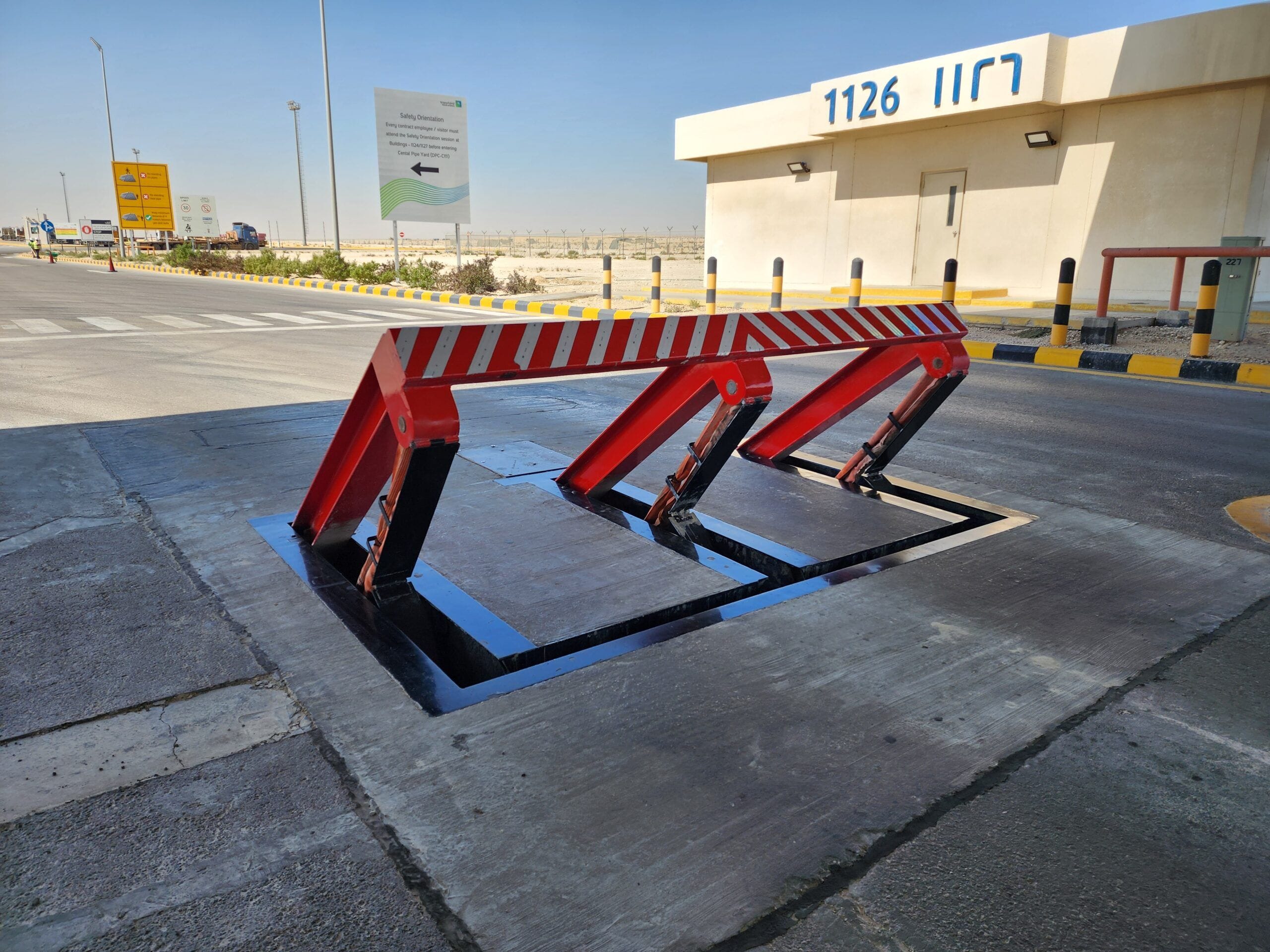
Wedge Barrier Design and Function: How Anti Ram Wedge Barriers Work
Vehicle-based threats represent some of the most sudden and dangerous risks to critical facilities. From ramming incidents at government compounds to unauthorized access attempts at corporate campuses, organizations encounter challenges that go far beyond the capabilities of basic gates, bollards, or traffic arms. Such conventional measures often prove insufficient against determined attackers or heavy vehicles traveling at high speeds.
This is where the wedge barrier sets itself apart. Built for rapid deployment and certified crash resistance, it combines reinforced engineering with seamless integration into modern security systems. Unlike passive barriers that merely slow traffic, a wedge barrier delivers a decisive halt, neutralizing threats instantly while supporting overall perimeter defense strategies. Its unique blend of strength, adaptability, and deterrence makes it an essential safeguard in today’s high-risk environments.
The Engineering Behind Wedge Barriers
The strength of any wedge barrier begins with its design philosophy: create an instant, immovable defense against hostile vehicles while maintaining seamless flow for authorized traffic. Unlike fixed bollards or slow-moving gates, the wedge barrier functions as both a physical obstacle and a responsive security measure, ensuring that protection never comes at the cost of daily efficiency. Its engineering balances two priorities: stopping a threat within seconds and blending into normal operations when not deployed.
At the core of this system is the reinforced barrier plate, constructed from high-tensile steel to withstand extreme forces. Instead of allowing impact energy to spread outward, the plate redirects it downward into the foundation, maximizing stopping power while minimizing damage to the surrounding area. This precision in energy transfer is what makes the barrier highly effective against even large, fast-moving vehicles that would overwhelm conventional perimeter defenses.
Supporting the barrier plate are advanced actuation and foundation systems. Hydraulic or electro-mechanical drives raise the barrier in under two seconds, ensuring attackers cannot outrun its deployment. Beneath the surface, deep-set reinforced concrete anchors the structure in place, while shallow-mount options provide flexibility for sites with limited underground clearance. Together, these components form an integrated design that enables a wedge barrier system to operate reliably day after day, maintaining both crash resistance and long-term durability.
Enhancing Security Team Efficiency
For modern security operations, speed and decisiveness are critical. Delays of even a few seconds can compromise a facility’s defenses. Vehicle wedge barriers significantly improve security team efficiency by handling one of the highest-risk tasks, stopping unauthorized or hostile vehicles, without requiring direct physical intervention from personnel.
- Remote and Automated Control: Wedge barriers can be integrated with advanced access control systems to provide seamless, automated protection. Security operators can trigger deployment from a control room or mobile device, reducing exposure to frontline risks. When linked with surveillance cameras, RFID scanners, or keycard systems, the barrier can respond instantly to threats, ensuring that decisions are executed without delay. This automation enables a layered defense, where the barrier is just one part of a larger, coordinated security ecosystem.
- Reduced Human Error: Human responses in high-pressure situations are prone to hesitation or mistakes, particularly when operators must make decisions in seconds about whether a vehicle poses a threat. Automated wedge barriers remove this uncertainty. Once a protocol is triggered, whether by system alerts, predefined rules, or manual activation, the barrier deploys with precision. This eliminates the variability of human decision-making in emergencies and ensures consistent, reliable protection.
- Force Multiplier: Wedge barriers act as a force multiplier by reducing the number of personnel required at vehicle access points. Instead of dedicating multiple guards to physically monitor, stop, and check vehicles, fewer staff are needed on the perimeter. This allows security teams to reallocate resources toward higher-value functions such as surveillance, crowd management, and rapid incident response. By doing so, organizations maintain strong physical security while optimizing manpower and operational costs.
- Enhanced Safety and Effectiveness: By removing the need for security personnel to confront or physically intercept threatening vehicles, wedge barriers minimize the risk of injury or fatality to staff. This not only increases overall safety but also enables security operations to function with greater confidence and efficiency. The result is a safer working environment, faster response times, and a more resilient security posture.
By offloading the burden of physically intercepting vehicles, wedge barriers enhance the safety, precision, and overall effectiveness of on-site security staff.
Integration into Modern Security Systems
A wedge barrier is most effective when deployed as part of a broader, layered defense strategy rather than as a standalone measure. Modern security installations emphasize interoperability, ensuring that each component of the system communicates seamlessly with others to provide a unified line of defense. By connecting physical barriers with digital intelligence, organizations can create adaptive security perimeters that respond to evolving threats in real time. This not only strengthens overall resilience but also reduces reliance on manual intervention, allowing security teams to operate with greater precision and efficiency.
Integration with access control systems allows the barrier to synchronize with technologies such as license plate recognition (LPR), biometric scanners, or smart card readers. This ensures that only authorized vehicles can pass through, while maintaining efficiency and minimizing the need for manual checks. Similarly, when connected to surveillance networks, operators can verify visual data in real-time before raising or lowering the barrier, thereby reducing the likelihood of error.
Beyond routine operations, wedge barriers can also be programmed to respond instantly in emergency situations. In the event of a breach, attempted intrusion, or national security alert, they can automatically deploy in coordination with other perimeter defenses such as sliding gates, bollards, or crash-rated fencing. This seamless integration elevates the wedge barrier from a simple mechanical obstacle into an intelligent, proactive element within a comprehensive security architecture.
How Wedge Barriers Deter Threats Before They Happen
While wedge barriers are engineered for immense structural strength, their value extends beyond their ability to physically stop vehicles; they also serve as a deterrent to potential threats. The sight of a heavy-duty steel plate embedded in the roadway instantly communicates the seriousness of a facility’s defenses and discourages hostile actors from even attempting forced entry. In this way, the barrier functions as both a physical obstacle and a visible declaration of security readiness.
The deterrence effect is reinforced by the barrier’s design and reputation. Hostile drivers recognize that such systems are crash-tested to withstand the impact of a speeding truck, often traveling at speeds of 50 mph or more. For authorized visitors, employees, and contractors, the presence of wedge barriers conveys authority and professionalism, reminding them that strict security protocols govern the site. This perception increases compliance with rules, reduces the likelihood of rule-breaking, and creates an atmosphere of order and discipline at vehicle access points.
Perhaps most importantly, the deterrent effect can prevent incidents from escalating. In many situations, the psychological impact of encountering a wedge barrier is sufficient to deter potential attackers, thereby saving both resources and lives by eliminating the need for physical confrontation. This intangible benefit is just as critical as the barrier’s crash-stopping power, as it enhances overall security posture by reducing the number of threats that ever materialize. By making it clear that unauthorized entry is not even worth attempting, wedge barriers act as a silent but highly effective line of defense.
Operational Efficiency and Sustainability
Today’s organizations expect their security infrastructure to deliver more than protection; they also demand long-term cost efficiency, reliability, and environmental responsibility. A modern wedge barrier system addresses these requirements through innovative engineering and design, ensuring that high-security installations remain practical to operate over the course of decades of use. This balance between performance and sustainability allows facilities to maintain strong defenses without incurring excessive operational or environmental costs.
- Energy-Efficient Drives: Advancements in actuation technology have made wedge barriers significantly more efficient. Electro-mechanical drives consume far less energy compared to traditional systems, while advanced hydraulic models incorporate intelligent fluid control to minimize power waste. This ensures rapid deployment when needed, without continuous energy drain during idle periods. For organizations running multiple entry points or operating in high-traffic environments, the cumulative energy savings can be substantial.
- Durability and Low Maintenance: Constructed from heavy-duty, corrosion-resistant materials such as composite-reinforced steel, modern wedge barriers are designed to withstand not only repeated impacts but also long-term exposure to harsh environmental conditions. This durability reduces the frequency of repairs and replacements, translating into lower lifecycle costs. Furthermore, modular system designs simplify servicing, allowing technicians to replace individual components quickly without taking the entire barrier offline. The result is minimal downtime, reduced labor costs, and uninterrupted protection.
- Environmental Considerations: Sustainability is becoming an increasingly important priority in infrastructure projects, and wedge barriers are designed to support this goal. Shallow-mount designs minimize the need for deep excavation, preserving underground utilities and reducing the environmental impact of installation. This makes them particularly suitable for sites with strict environmental regulations, historic preservation requirements, or complex underground utility networks. By reducing material use and site disruption, these models align security goals with ecological stewardship.
By combining energy efficiency, long-term durability, low maintenance needs, and environmentally conscious designs, wedge barriers offer more than just immediate protection. They represent a future-proof investment that supports both operational effectiveness and organizational sustainability goals, ensuring security without compromise.
Innovations Shaping the Future of Wedge Barriers
The security landscape is constantly evolving, and wedge barriers are advancing in step with these changes. No longer just static mechanical defenses, modern systems are incorporating automation, intelligence, and resilience to meet the demands of high-risk environments. These innovations ensure that barriers remain effective not only against current threats but also adaptable to the challenges of tomorrow.
One of the most significant developments is the integration of advanced technologies. Artificial intelligence now enables barriers to respond automatically by analyzing vehicle behavior in real time, identifying potential threats before they escalate. At the same time, innovative diagnostic features allow systems to self-monitor, sending alerts when maintenance is needed. This predictive approach reduces downtime, prevents unexpected failures, and ensures that barriers remain fully operational when they are most needed.
Engineering and sustainability improvements are also shaping the next generation of wedge barriers. The use of lighter alloys and composite materials has increased strength-to-weight ratios, reducing mechanical wear while enabling faster deployment speeds. Meanwhile, the adoption of solar-assisted power sources provides sustainable energy options, making barriers to viability even at remote sites such as military installations or critical infrastructure with limited grid access. Together, these advancements position wedge barriers as adaptable, future-proof investments that can evolve alongside modern threats and provide long-term protection.
Why BSP Provides Security You Can Rely On
Protecting high-risk facilities demands more than traditional gates or bollards. A wedge barrier delivers rapid deployment, crash-tested strength, and seamless integration into broader security ecosystems. It acts as both a visible deterrent and a reliable physical safeguard, ensuring that even the most determined vehicle threats are decisively neutralized.
At Black Security Products (BSP), headquartered in Houston, TX, and Kalispell, MT, with additional offices in Washington and Michigan, our wedge barriers are engineered for reliability and adaptability. From heavy-duty deep-mount systems to shallow-mount designs for constrained sites, BSP provides tailored solutions that integrate effortlessly with surveillance and access control. Every system undergoes rigorous testing to guarantee durability, performance, and low-maintenance operation.
A vehicle wedge barrier is more than equipment; it is a commitment to protecting people, assets, and operations. Contact us today and fortify your perimeter with a solution designed for both today’s threats and tomorrow’s challenges.