

Specifying SecureMesh High Security Fence Systems for Custom Perimeter Fencing Projects
Not every perimeter security project can rely on off-the-shelf fencing. Sites with irregular terrain, specific wind load requirements, or elevated threat levels often need a system engineered around the exact conditions on the ground. SecureMesh™ is one of Black Security Products’ high security fence systems built specifically for this kind of custom specification, using a dense mesh pattern and concealed fastener design to meet medium to high-threat security requirements.
This guide walks through what specifying engineers and project managers should evaluate when custom-fitting SecureMesh to a perimeter fencing project, from mesh spacing to site-specific engineering considerations.
What Makes a Fence System Suitable for Custom Specification
Custom perimeter projects rarely fit a single standard configuration. Terrain changes, wind exposure, and site-specific threat assessments all influence what a fencing system needs to deliver beyond basic boundary marking. High security fence systems designed for custom specification need to account for these variables from the earliest design stage rather than forcing a site to adapt to a fixed product.
Key considerations for custom specification include:
- Terrain variation across the perimeter, including slopes and grade changes
- Local wind load requirements based on site geography
- Threat level classification for the facility being protected
- Coordination with existing infrastructure, utilities, or adjacent barriers
- Aesthetic or color requirements tied to facility branding or environment
SecureMesh addresses these variables through a design process that builds each system around the site rather than adapting a generic panel to fit.
Mesh Spacing and Material Specifications Worth Reviewing
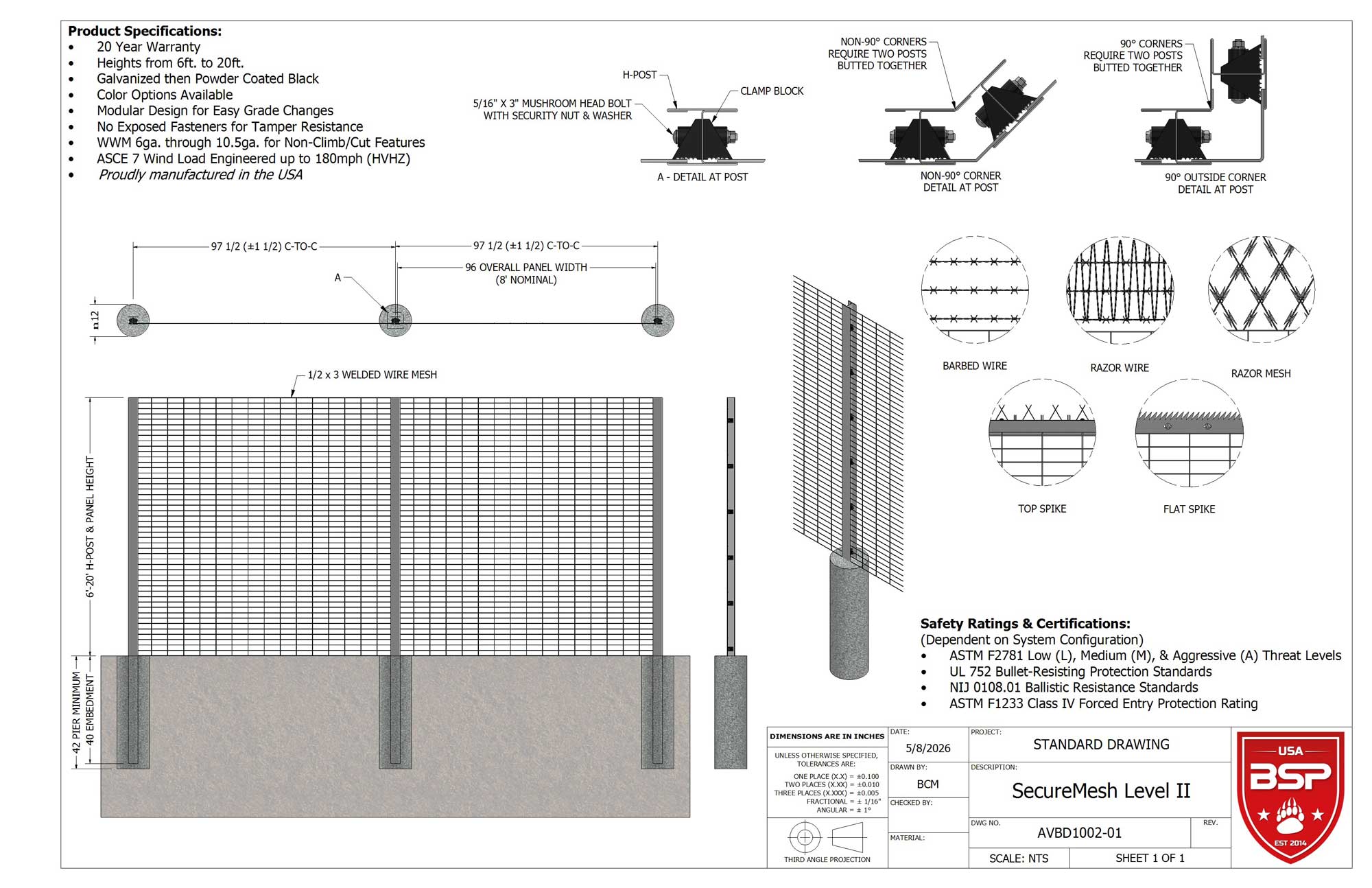
The core of any anti-climb, anti-cut fencing system comes down to mesh spacing and material gauge. SecureMesh uses a dense 3-inch by 0.5-inch mesh configuration specifically engineered to eliminate footholds and resist common cutting tools like bolt cutters.
| Specification | Detail |
| Mesh spacing | 3″ x 0.5″ dense weave pattern |
| Fence height | Available up to 15 feet |
| Fastener design | Internal, tamper-proof, concealed from the attack side |
| Base material | Hot-dip galvanized steel |
| Finish | Polyester powder coating, minimum 60-micron topcoat |
| Color options | Black, desert tan, olive drab, bronze, white, and additional RAL colors |
| Optional enhancements | Barbed wire, razor coil, wall spikes |
A perimeter security fence built on this mesh density gives specifying engineers a documented starting point for comparing SecureMesh against other high security fence systems being considered for a project.
Site-Specific Engineering Requirements to Plan Around
Custom perimeter fencing projects require more upfront engineering than standard installations. SecureMesh panels and posts are precision-built to match each site’s terrain and wind load conditions, which means accurate site data needs to be collected before manufacturing begins.
- Wind load requirements based on regional building codes and site exposure. Wind ratings vary by geography, so confirming local code requirements early ensures the fence design meets structural standards for the specific site.
- Terrain survey data to determine post spacing and foundation depth. Uneven ground or varying soil conditions directly affect how posts are spaced and anchored, making accurate survey data essential before fabrication begins.
- Grade change locations that may require modified panel configurations. Slopes and elevation shifts along the perimeter often call for adjusted panel heights or angles to maintain consistent security coverage.
- Gate and access control integration points along the perimeter. Identifying gate locations upfront allows panels and posts to be engineered around access points rather than retrofitted after installation.
- Coordination with any integrated barrier systems, such as cable barriers for vehicle mitigation. Sites requiring combined pedestrian and vehicle protection need this coordination built into the design phase, not added as an afterthought.
Because posts and panels are precision-built to these specifications rather than field-cut, errors in the initial site survey can delay the entire manufacturing timeline. Confirming each of these factors before fabrication begins is the most reliable way to keep a custom SecureMesh installation on schedule.
Visibility and Surveillance Compatibility
Custom fencing specifications increasingly need to balance security with surveillance requirements. A fence built purely for maximum resistance can end up working against the very cameras and sensors it’s meant to support. High security perimeter fencing that blocks camera sightlines can undermine a facility’s broader security strategy, even if the fence itself resists climbing and cutting, since intrusion attempts that go unseen are far harder to respond to in time.
SecureMesh addresses this by maintaining a see-through mesh design that remains CCTV-compatible, allowing security teams to monitor the perimeter without gaps in visual coverage. This matters most at facilities running layered security systems, where cameras, sensors, and the fence itself are all expected to work together rather than as separate, disconnected measures. A dense mesh that still reads as open to a camera lens gives security operators continuous visibility along the entire fence line, day or night.
Facilities specifying custom fencing should confirm that mesh density resists intrusion without obstructing camera lines of sight, that fence height does not interfere with camera mounting positions, and that lighting placement is coordinated with fence design during the specification phase. These details are easy to overlook when fencing and surveillance are specified by different teams, which is why reviewing them together before installation helps prevent blind spots once the system is in place.
Durability Considerations for Long-Term Custom Installations
Durability Considerations for Long-Term Custom Installations
Custom perimeter fencing represents a long-term investment, particularly at facilities where the fence line will remain in place for decades. Material durability should factor into specification decisions alongside security performance.
| Durability Factor | Why It Matters for Custom Installations |
| Hot-dip galvanization | Provides a base layer of corrosion resistance built into the steel itself |
| Polyester powder coating | Adds long-term protection against rust, chipping, and weathering |
| Coastal or high-humidity environments | Accelerate wear, requiring confirmed coating specifications during design |
| Industrial environments | Chemical exposure and airborne contaminants can degrade standard finishes faster |
| Double skin mesh construction | Adds a second mesh layer for facilities requiring extended intrusion delay |
Specifying engineers evaluating high security welded wire mesh fence options for particularly high-risk sites should factor these conditions into the design phase upfront, since retrofitting coating or construction upgrades after installation is far more costly than specifying them correctly from the start.
Where Custom SecureMesh Specifications Are Typically Used
High security fence systems built through custom specification are most common at facilities where standard fencing cannot meet the site’s threat profile or physical constraints.
Common applications include:
- Correctional facilities requiring specialized security configurations
- Data centers and power plants with strict perimeter delay requirements
- Government and defense installations with site-specific threat assessments
- Critical infrastructure sites where terrain or wind exposure rules out standard panels
The Cybersecurity and Infrastructure Security Agency’s overview of critical infrastructure sectors identifies utility, communications, and government facilities among those where physical security failures can affect far more than the immediate site, reinforcing why custom-engineered fencing is often specified rather than standard product lines at these locations.
Working Through the Specification Process
Specifying a custom SecureMesh installation typically starts well before manufacturing, with site surveys and engineering review feeding directly into panel and post fabrication. Project teams reviewing available fencing and barrier systems during this phase can compare SecureMesh against other configurations, including integrated cable barrier options rated for ASTM M30 and M50 vehicle protection, to determine the right fit for combined pedestrian and vehicle threats.
Coordinating this process with a provider’s design and engineering team early in the project timeline helps avoid the rework that comes from finalizing a specification before terrain and wind load data are fully confirmed.
Getting Custom Specification Right From the Start
High security fence systems like SecureMesh deliver the strongest results when the specification process accounts for site-specific terrain, wind load, threat level, and surveillance requirements from the beginning rather than treating fencing as a standard product to be adapted after the fact. Mesh density, fastener design, and coating specifications all play a role in whether a custom installation performs as intended over its full service life.
Black Security Products builds each SecureMesh installation around these site-specific requirements, giving specifying engineers a custom perimeter fencing solution engineered for the exact conditions of the project rather than a generic configuration.