

Anti Climb Temporary Fence Panels vs Chain Link Fencing: What Site Managers Should Know
Site managers responsible for construction zones, utility work, and infrastructure projects face a recurring decision when selecting perimeter protection. Standard chain link fencing has been the default choice for decades, but it offers limited resistance against intrusion. Anti climb temporary fencing is a mobile perimeter barrier engineered with reduced foothold gaps and reinforced panel connections, making unauthorized entry significantly harder than with conventional mesh fencing. For sites holding equipment, materials, or sensitive infrastructure, that difference in resistance often determines whether a breach occurs.
Choosing between these two systems is not just a matter of cost. It involves evaluating theft risk, liability exposure, project duration, and the type of site being protected. This comparison breaks down where each system performs well and where it falls short.
What Makes Anti Climb Temporary Fencing Different
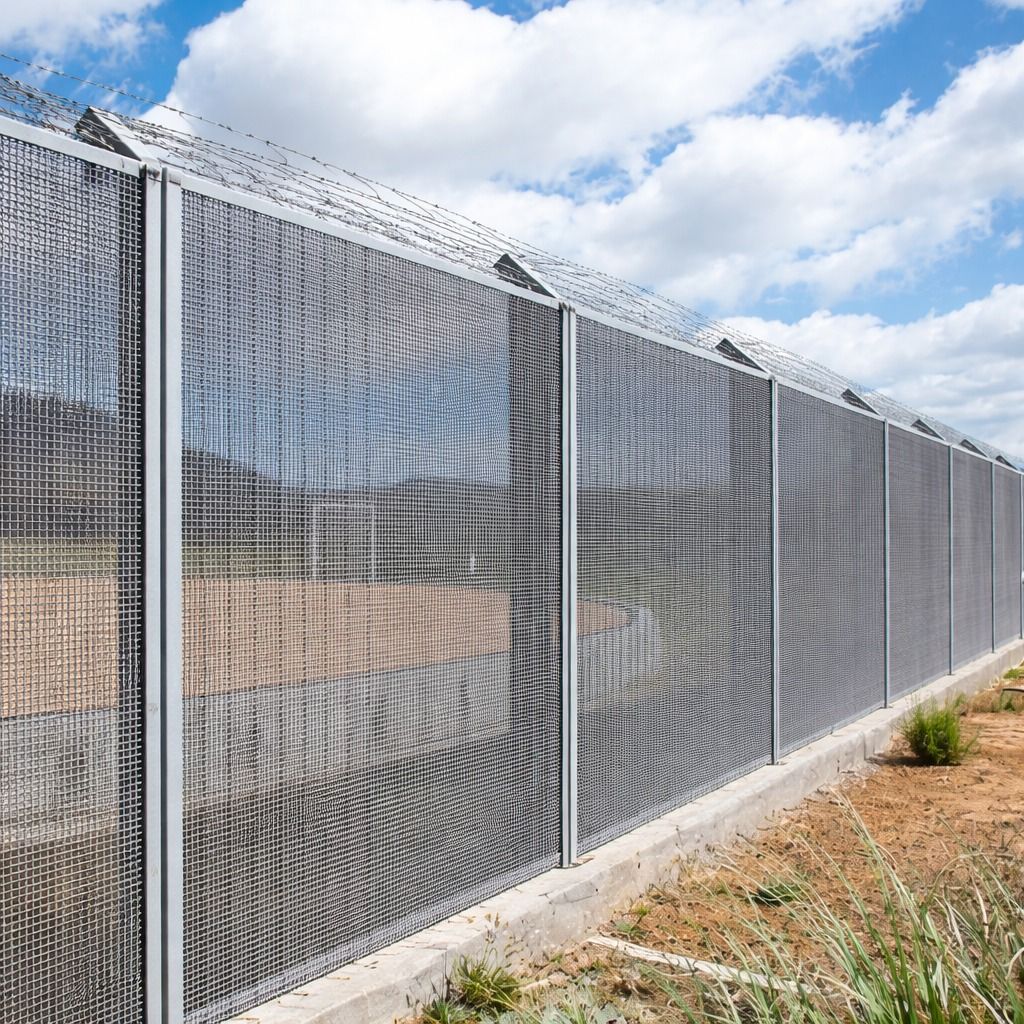
Anti climb temporary fencing uses a small aperture mesh pattern that eliminates the wide gaps found in standard chain link, which relies on a diamond-shaped weave with openings large enough for a boot or fingers to grip. Anti climb panels close that gap with a tighter weld pattern, often paired with vertical bars or heavy gauge wire that resists cutting and bending.
Many job sites now specify SecureMesh™ temporary fencing for its small aperture design, which limits foot and hand placement across the entire panel run. Key construction features typically include welded or riveted panel joints instead of loosely wired connections, reinforced base plates or ballast blocks for stability, and anti-tamper coupling systems that prevent panel separation from outside the perimeter.
Standard Chain Link: Strengths and Limitations
Standard chain link fencing remains common because it is inexpensive, widely available, and quick to install on short-term jobs. For low-risk sites where the fencing is meant to define a boundary rather than stop intrusion, chain link can be an adequate temporary solution.
However, chain link carries several limitations that become significant on higher-risk sites:
- Wide diamond openings provide easy climbing footholds
- Thin gauge wire is prone to cutting with basic hand tools
- Loose panel connections can be pried apart without specialized equipment
- Limited visual deterrent value compared to reinforced systems
Sites storing copper wiring, fuel, heavy equipment, or hazardous materials are frequent theft targets. Weld density in galvanized welded wire mesh fence systems plays a direct role in resisting cutting tools, a factor standard chain link lacks entirely.
Comparing Performance Across Common Site Conditions
Different job sites carry different levels of risk, and the right fencing choice depends heavily on what is being protected and for how long. The table below outlines how each system performs across common scenarios.
| Site Condition | Standard Chain Link | Anti Climb Temporary Fencing |
| Short-term low-value storage | Adequate for boundary marking | Often unnecessary cost |
| Active construction with equipment on site | Limited deterrence | Strong deterrence and delay |
| Utility or infrastructure work zones | Weak against tampering | Resistant to tampering and cutting |
| Event or crowd control perimeters | Minimal climb resistance | High climb resistance |
| Sites with prior theft or vandalism history | High vulnerability | Significantly reduced vulnerability |
This comparison shows that the value of anti climb temporary fencing increases sharply as site risk rises. For low-stakes, short-duration jobs, standard chain link may still make financial sense. The Cybersecurity and Infrastructure Security Agency’s vehicle incident prevention and mitigation security guide recommends a layered approach to perimeter protection devices, reinforcing why fencing strength should scale with site risk rather than follow a one-size-fits-all standard.
Why Foothold Design Matters More Than Fence Height
Many site managers assume that fence height is the primary factor in preventing intrusion, but foothold access plays a larger role. A taller chain link fence is still climbable if the mesh openings allow a foot or hand to grip the wire. Anti climb temporary fencing addresses this by reducing aperture size to the point where climbing becomes physically difficult, regardless of fence height.
High security perimeter fencing built with anti climb properties typically pairs a tight mesh pattern with a smooth or reinforced surface finish, removing the ridges and gaps that create natural grip points. This is why many government and industrial facilities specify anti climb systems even when overall fence height remains standard. Some site managers instead choose palisade fencing design, which relies on vertical spacing rather than mesh density to achieve a comparable anti climb effect.
Where Security Mesh Fencing Fits Into the Comparison
Security mesh fencing refers to welded panel systems using a dense grid pattern instead of woven wire, and it often serves as the underlying structure for anti climb temporary fencing products. Unlike chain link, which relies on tension across a woven sheet, security mesh fencing uses fixed weld points at every intersection. This construction method resists both climbing and cutting attempts more effectively than standard woven wire. The same principle underpins the vehicle barrier side of perimeter security, where crash performance is measured against ASTM F2656, the standard test method for crash testing of vehicle security barriers, giving site managers a comparable way to evaluate physical resistance across different product types.
Site managers evaluating temporary fencing options should look for:
- Weld point density across the mesh pattern
- Wire gauge thickness at load-bearing points
- Panel-to-panel connection hardware
- Base stability under wind load conditions
Double skin construction, as used in SecureMesh™ Delay, raises weld density well beyond what temporary chain link panels typically offer.
Cost Considerations for Site Managers
Budget is a primary factor in fencing decisions, and it is reasonable for site managers to weigh upfront cost against risk exposure. Standard chain link generally costs less to rent or purchase, and installation labor is often lower due to its lightweight construction. Anti climb temporary fencing carries a higher initial cost because of its reinforced materials and tighter mesh construction.
That said, the cost comparison should account for potential losses. A single theft incident involving copper wiring, tools, or heavy equipment can exceed the cost difference between the two fencing types many times over. Site managers on projects involving valuable materials or extended timelines often find that the higher upfront investment in anti climb systems reduces total project risk over the life of a contract.
Temporary Fencing for Events and Restricted Access Zones
Beyond construction sites, temporary security fence panels are commonly used for controlled access at public events, utility work zones, and restricted government or industrial areas. In these settings, the fencing must do more than mark a boundary. It needs to actively discourage unauthorized entry while allowing controlled access points for authorized personnel.
Anti climb configurations are particularly useful in these environments because they combine physical resistance with visual deterrence. A perimeter security fence with reinforced mesh signals a higher security posture, which can discourage intrusion attempts before they happen. Rigid steel construction in heavy duty welded wire fence panels supports surveillance visibility and access control integration at active sites.
Making the Right Choice for Your Site
Selecting between anti climb temporary fencing and standard chain link comes down to a straightforward risk assessment. Site managers should consider the following questions before making a decision:
- What is the value of the materials, equipment, or infrastructure on site
- How long will the fencing remain in place
- Has the site experienced theft, vandalism, or unauthorized access before
- Is the location visible to the public or isolated from regular monitoring
- Are there regulatory or contractual requirements for perimeter security
Sites answering yes to multiple risk factors are strong candidates for anti climb temporary fencing, even with the higher upfront cost. Low-risk, short-duration jobs may still be well served by standard chain link.
Anti Climb Fencing Delivers Stronger Protection Where It Counts
Standard chain link marks a boundary. Anti climb temporary fencing stops intrusion. As construction sites, utility zones, and event perimeters continue facing higher theft and access risks, matching fencing strength to actual site risk has become a critical part of modern perimeter security planning. Anti climb temporary fencing provides the mesh density and reinforced construction needed to secure changing site conditions without sacrificing mobility or deployment speed.
At Black Security Products, we engineer perimeter security solutions for high-risk operational environments, including anti climb mesh systems, high security perimeter fencing, and crash-rated barrier solutions built for government, defense, critical infrastructure, and commercial construction sites. From temporary job site protection to long-term perimeter planning, BSP delivers fencing built for reliability, deployment flexibility, and proven performance.