

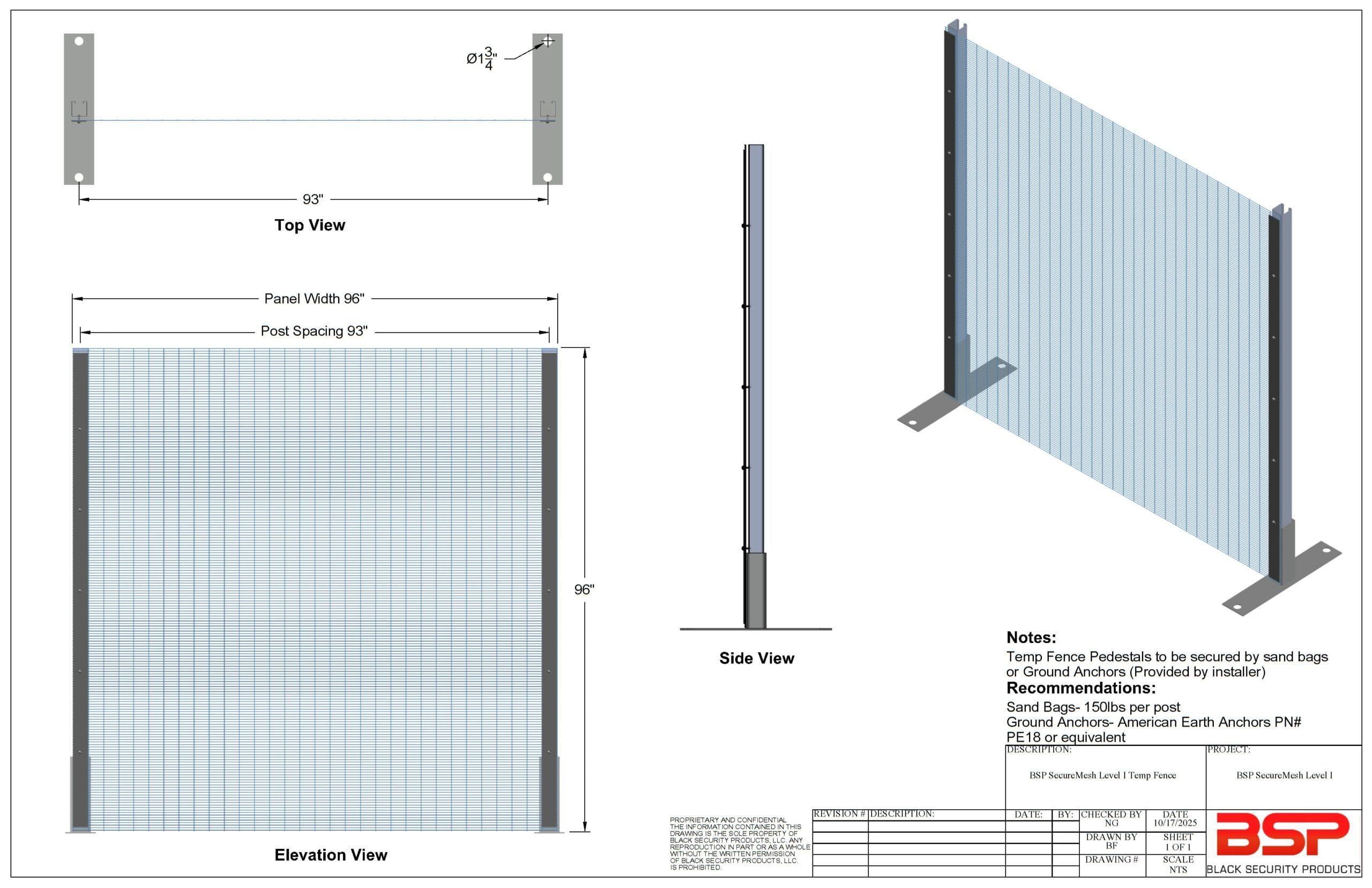
Choosing Anti Climb Temporary Fence Panels for Utility and Infrastructure Work Zones
Utility and infrastructure work zones carry risks that standard construction sites do not. Substations, water treatment facilities, and telecom hubs hold equipment that keeps essential services running, which makes them frequent targets for copper theft, vandalism, and unauthorized access. An anti climb temporary fence panel addresses this risk by combining a tight mesh pattern with reinforced construction, giving crews a mobile perimeter that resists scaling attempts far better than standard fencing.
Selecting the right panel system for a utility or infrastructure project means weighing mesh design, installation speed, and site-specific access requirements. This guide breaks down what site managers and project planners should evaluate before specifying temporary fencing for these higher-risk environments.
What Makes Utility Sites a Higher-Risk Fencing Category
Utility substations, pump stations, and telecom equipment yards face threats that go beyond general trespassing. Copper theft alone drives significant losses across the utility sector each year, and a breach at these sites can disrupt service to entire neighborhoods rather than just cause property damage. An anti climb temporary fence panel is built specifically for this elevated risk profile, using a small aperture mesh that removes the footholds standard chain link provides.
Common risk factors at these sites include:
- High resale value of copper wiring and conductive metals
- Remote or unmonitored site locations
- Extended project timelines that leave equipment exposed for months
- Regulatory requirements tied to public safety and service continuity
A perimeter security fence at these locations needs to function as an active deterrent rather than a simple boundary marker, a distinction covered further in guidance on conducting threat assessments before installing perimeter security at high-value facilities.
Panel Construction Details That Separate Real Protection From Marketing Claims
Not every temporary fencing product marketed as anti climb performs the same way in the field. Site managers should evaluate specific construction details before specifying a system for utility or infrastructure work.
| Feature | Why It Matters |
| Small aperture mesh | Removes footholds that allow climbing |
| Welded panel joints | Resists prying and separation attempts |
| Heavy gauge wire | Increases resistance to bolt cutters |
| Reinforced base supports | Maintains stability in high-wind areas |
| Anti-tamper couplers | Prevents panel removal from outside the perimeter |
Temporary security fence panels built around this combination of small aperture mesh and reinforced coupling hardware hold up better under sustained exposure than standard rental fencing, particularly on projects that run for several months.
Does Your Project Actually Need Anti Climb Protection
Not every utility or infrastructure work zone requires the same level of protection. A short-term valve repair in a low-traffic area carries different risk than a substation upgrade near a public roadway. Project planners should assess the following before selecting panel type:
- Value and criticality of the equipment being protected
- Public visibility and foot traffic near the site
- Duration of the project and exposure window
- History of theft or trespassing at similar facilities
- Local regulatory or utility provider security requirements
High security perimeter fencing becomes the clear choice once several of these risk factors apply, since it delivers stronger resistance to cutting and climbing than standard temporary panels. Sites with lower risk profiles may still be adequately served by conventional chain link on a short-term basis.
How Mesh Density and Wire Gauge Determine Real-World Resistance
How Mesh Density and Wire Gauge Determine Real-World Resistance
Fencing performance at utility sites comes down to two factors more than any other: how tight the mesh weave is and how thick the wire gauge runs. A dense weld pattern eliminates the gaps an intruder would use to gain a foothold, while heavier gauge wire resists cutting with hand tools. Panels marketed as anti climb without documented specifications should be evaluated carefully, since aperture size, weld consistency, and coating quality vary significantly across manufacturers.
Site managers reviewing product specs should confirm aperture size in inches rather than trusting a general “anti climb” label, wire gauge thickness at both vertical and horizontal intersections, weld point consistency across the full panel, and coating or galvanization suited for outdoor exposure. Double skin security mesh fencing demonstrates how layering mesh density well bey
Coordinating Fence Layout Around Live Utility Operations
Utility and infrastructure projects often involve equipment access, emergency vehicle routes, and coordination with multiple contractors on the same site. Fence panel installation needs to account for these operational realities without compromising security.
- Position gates for equipment access without weakening the perimeter. Gate placement should accommodate trucks and machinery while keeping the surrounding mesh continuous and free of gaps that could offset the security gained elsewhere on the fence line.
- Keep emergency access lanes clear inside the fence line. Fire, medical, and utility response vehicles need an unobstructed path at all times, so these lanes should be marked and reserved before other equipment or materials are staged on site.
- Secure base plates and ballast against displacement. Wind loads and incidental vehicle contact can shift unanchored panels, so base stability should be verified during installation rather than assumed from the product specs alone.
- Coordinate fence layout with existing utility markings and buried infrastructure. Panel footings and ballast placement need to avoid conflicts with underground lines, which means layout planning should happen alongside utility locates rather than after fencing is already staged.
A fence installed without accounting for these coordination points often ends up with gaps near gates or equipment entries, a common issue at data center perimeter protection projects where access control and fencing must work together rather than in isolation. Planning these details in advance keeps the perimeter secure without slowing down the crews working inside it.
Weighing the Budget Against What a Breach Actually Costs
Weighing the Budget Against What a Breach Actually Costs
Anti climb temporary fence panels cost more upfront than standard chain link rentals, largely due to the reinforced mesh and hardware involved. For utility and infrastructure projects, that additional cost needs to be weighed against the consequences of a breach, which can include equipment replacement, service disruption penalties, and liability exposure tied to public safety.
| Project Characteristic | Why It Justifies the Higher Investment |
| Multi-month project timelines | Sustained equipment exposure increases the window for theft or tampering |
| Documented theft or vandalism history | Prior incidents signal an elevated ongoing risk at the site |
| Facilities tied to public utility service continuity | A breach can disrupt service to entire communities, not just the site itself |
| Contractual or regulatory security requirements | Non-compliance can carry penalties beyond the cost of the fencing itself |
Reviewing how to install security fencing for commercial and industrial sites can help project teams estimate labor and planning requirements before committing to a fencing budget. Shorter projects in lower-risk locations may still find standard fencing adequate, making a site-specific risk assessment the most reliable way to justify the spend.
What Industry Guidance Says About Perimeter Selection
Choosing the right anti climb temporary fence panel comes down to matching product specifications to the actual risk profile of the work zone. The Security Industry Association’s fundamental aspects of perimeter security barriers guidance outlines how factors like aperture size, weld density, and perch points directly affect a barrier’s ability to resist climbing and cutting attempts, reinforcing why generic fencing specifications are not sufficient for higher-risk utility work. Black Security Products designs its anti climb systems around these same principles.
Sector-specific consequences also matter. Utility, water, and communications facilities carry an added layer of risk since a physical security breach at these sites can disrupt essential services for entire communities, not just cause property loss. That broader stake is exactly why perimeter protection at these locations warrants a higher standard than general construction fencing.
Matching the Fence to the Risk, Not the Other Way Around
An anti climb temporary fence panel gives utility and infrastructure project teams a level of protection that standard chain link cannot match, particularly on sites where a breach could disrupt public services or expose valuable equipment. Matching mesh density, wire gauge, and installation planning to the specific risk profile of each work zone is the most reliable way to prevent intrusion while keeping projects on schedule.
Black Security Products engineers anti climb mesh systems built for exactly this kind of high-stakes deployment, giving utility and infrastructure teams a perimeter that scales to real project risk. For higher-risk utility and infrastructure work, investing in anti climb panels upfront through BSP is generally far less costly than recovering from a breach.