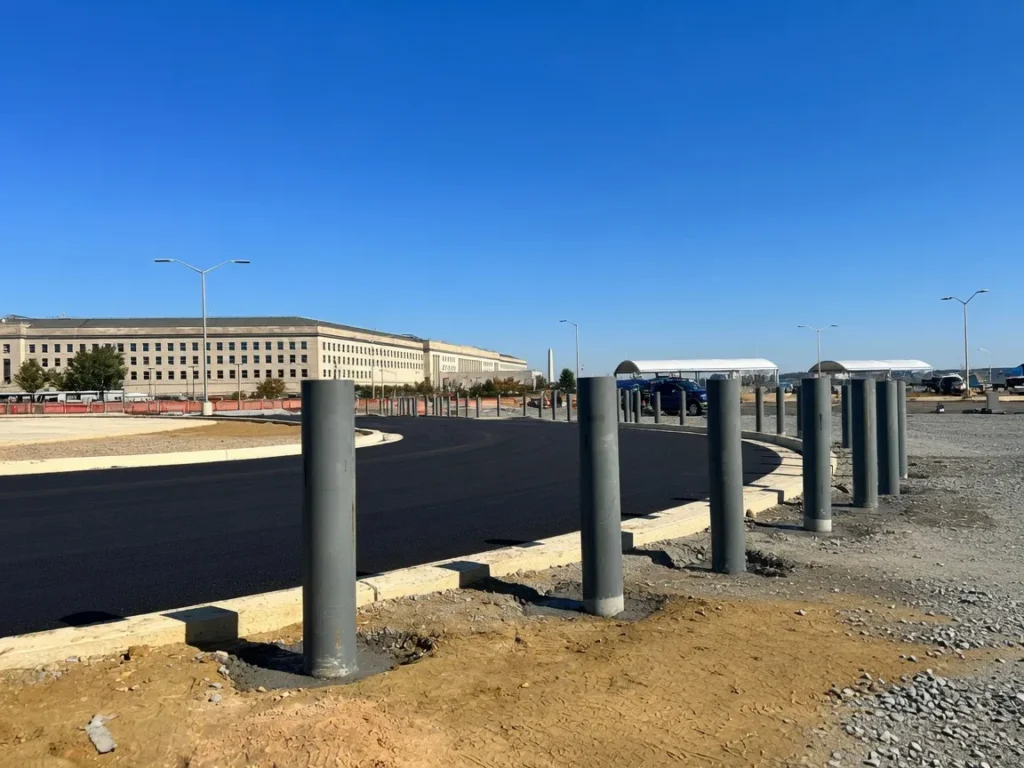

Crash posts
Square structural steel tube posts set in reinforced concrete foundations and capped with a bolted steel cover plate. An internal steel support plate carries the opening the beam passes through.
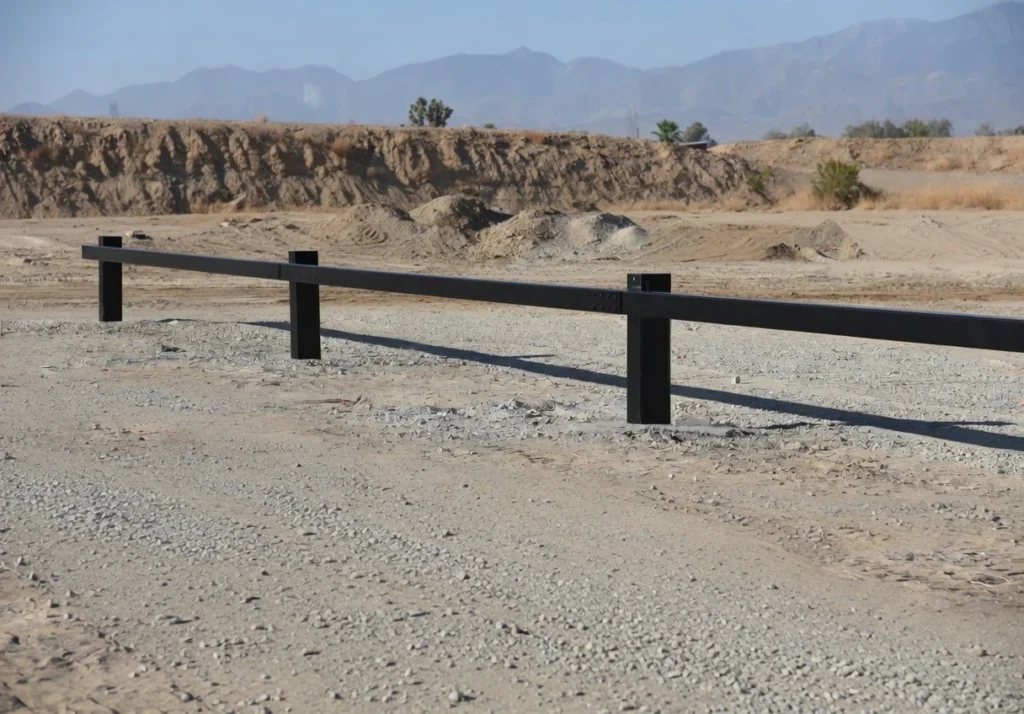
The AVBD 951 is a post and beam barrier: square steel crash posts set in reinforced concrete foundations, with a continuous square steel blocking beam passing through each post and locked in place with a hardened steel pin. The beam takes the impact directly. There is no cable to tension, no arm to raise and nothing to power or maintain.
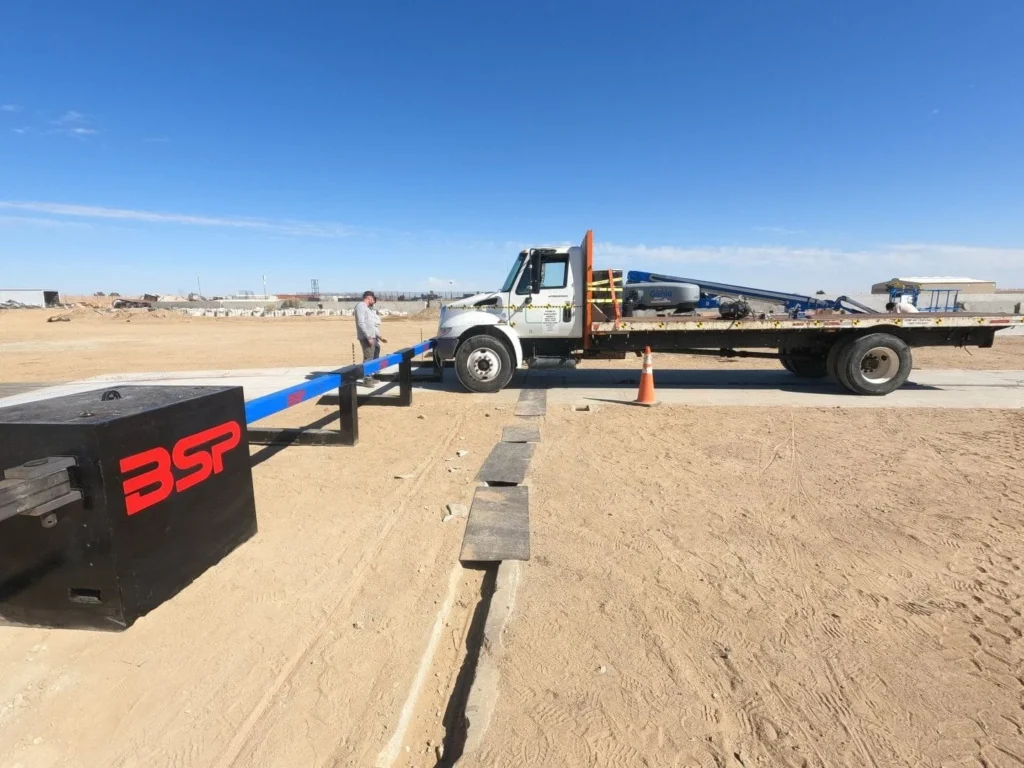
It was crash tested to ASTM F2656 at M50, a 15,000 lb truck at 50 mph, and earned a P1 rating as a complete four post, three beam run struck at the center of a span. The truck stopped 0.95 m past the barrier line, inside the one meter limit for P1, and the opening stayed blocked.
A rigid beam deflects less than a cable line, so it gives up almost none of the standoff behind it. It is heavier in material and takes more to install than a cable line, and where the standoff is tight that is the trade a site has to make. Where a cable line will do the job, BSP will say so.
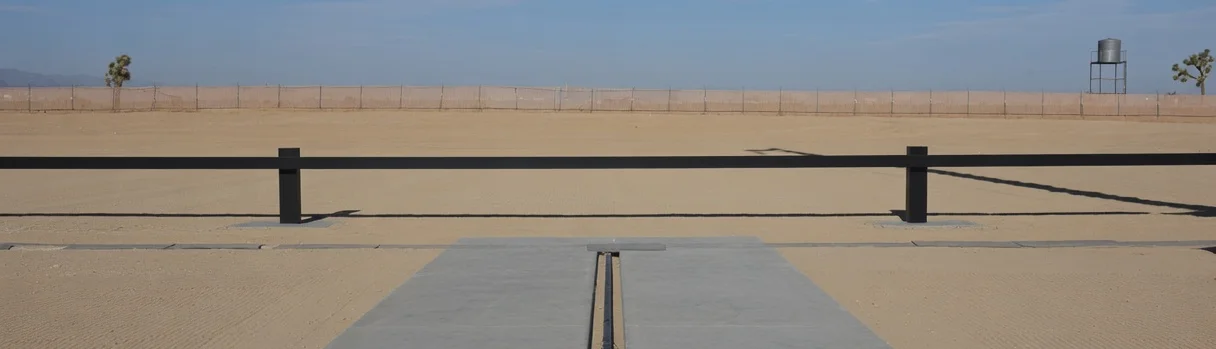
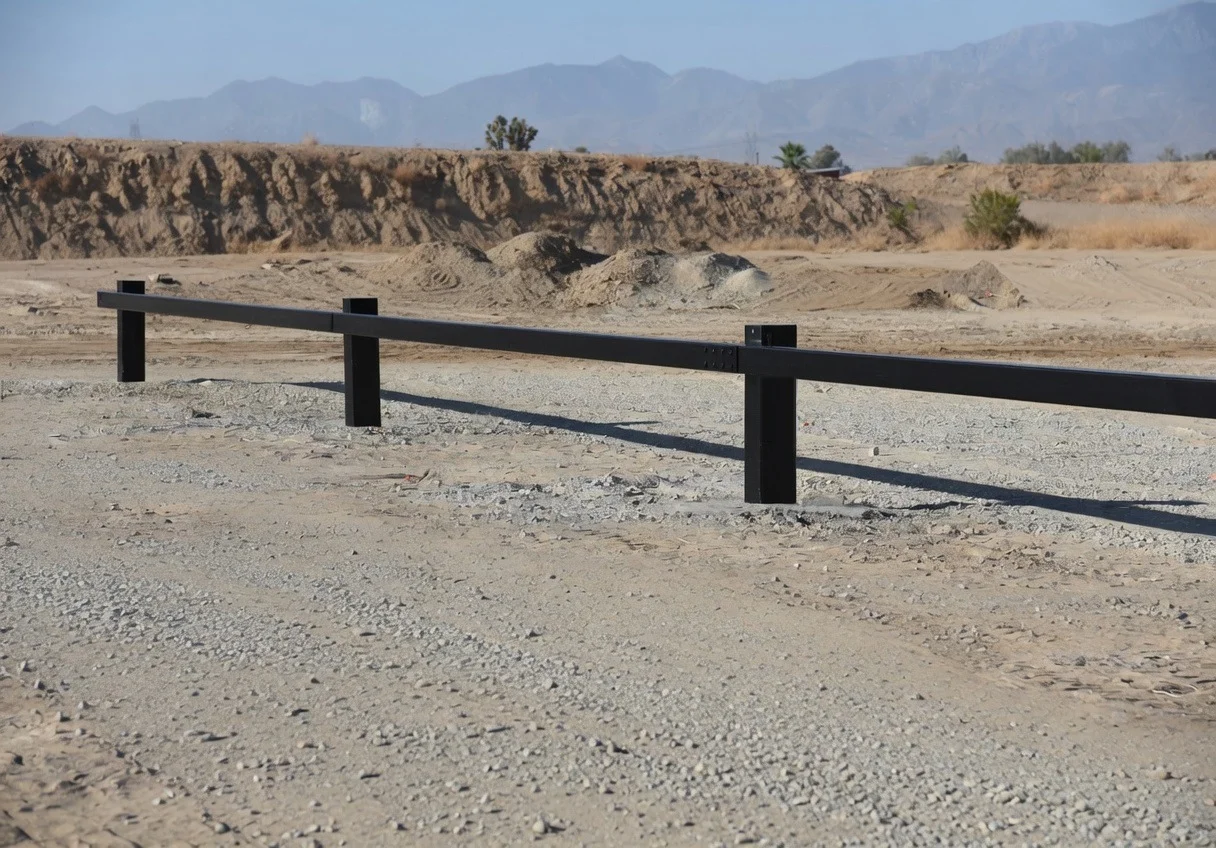
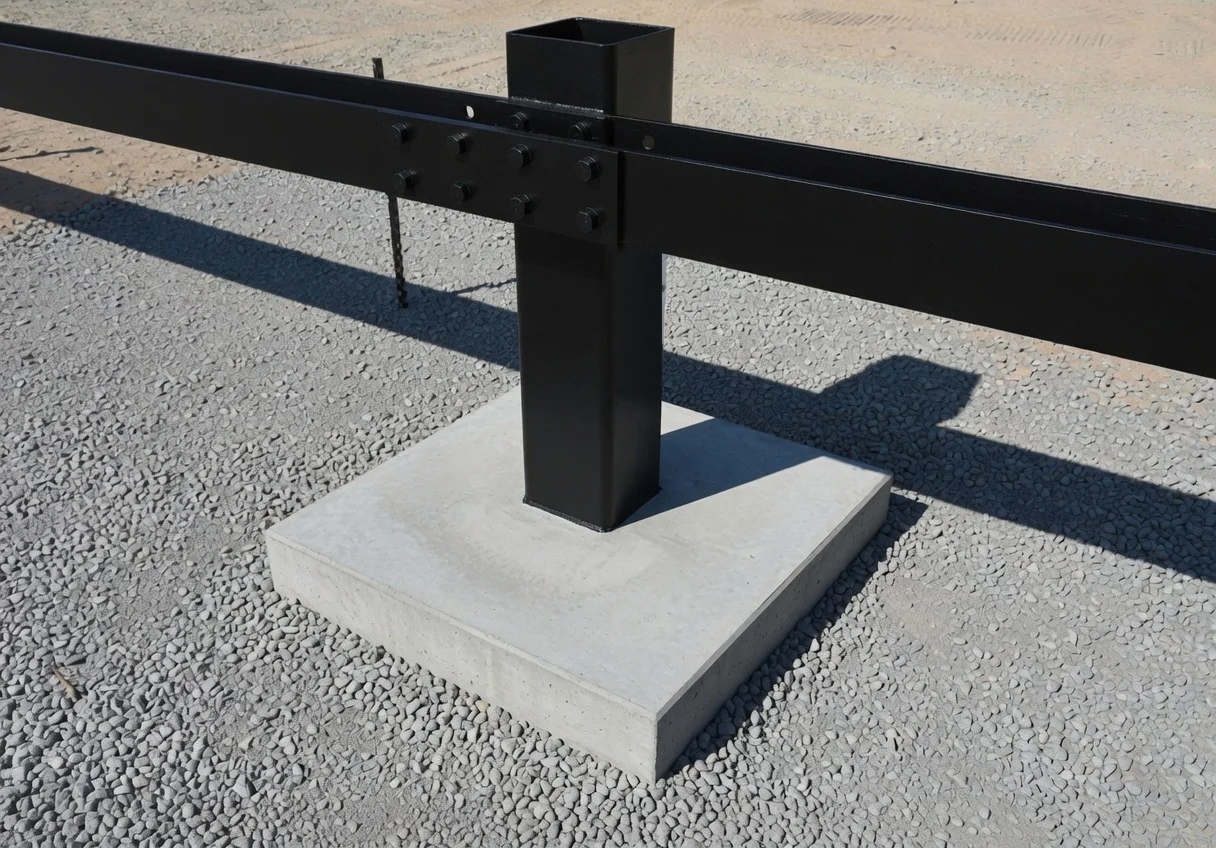
Square structural steel tube posts set in reinforced concrete foundations and capped with a bolted steel cover plate. An internal steel support plate carries the opening the beam passes through.
A continuous square structural steel tube beam set at bumper and frame height. The beam passes through an opening in each post rather than bolting to its face, so the post and the beam resist the impact together.
An induction hardened steel pin passes through the post and the beam at each post and is held by a steel collar. The pin interlocks post and beam so the line works as one member under impact.
A reinforced concrete drilled pier at each post, with rebar dowels through the post to tie it into the concrete. Foundation design is confirmed for site soil conditions at submittal.
Post and beam is specified when the section calls for a rigid barrier or the standoff will not tolerate deflection. Short runs, tight standoff and any line where the specifier has written a rigid barrier into the section are where a beam beats a cable.
Longer runs with room behind the line, and perimeters that need to integrate with SecurePale™ or SecureMesh™ fencing, are usually better served by BSP's passive cable barrier, which is crash tested at M30 and M50 in P1 and P2 configurations. Both are passive, both are crash tested and BSP builds both, so the recommendation follows the site rather than the product.
| Comparison | AVBD 951 Post and Beam | AVBD 100 Series Passive Cable |
|---|---|---|
| Behavior under impact | Rigid beam, minimal deflection | Cable line, deflects under impact |
| Fence integration | Standalone barrier line | Integrates with SecurePale™ and SecureMesh™ fencing |
| Ratings on file | M50 P1 | M30 P1, M30 P2, M50 P1, M50 P2 |
| Best fit | Tight standoff, short runs, rigid barrier written into the section | Long runs with room behind the line |
| Power and moving parts | None | None |
| Model / AVBD | Threat | Penetration | Standard | Test Lab |
|---|---|---|---|---|
| AVBD 951 | M50 | P1 | ASTM F2656 | Independent laboratory, report TR-P37202-02-NC |
The AVBD 951 was crash tested to ASTM F2656 at M50 by an independent laboratory: a 15,000 lb truck at 50 mph, perpendicular to the line and centered on the span between two posts. Maximum dynamic penetration was 0.95 m, measured from high speed video; static penetration after the vehicle came to rest was 0.06 m. The blocking beam bent at mid span, the posts on either side deformed but held the beam, and the opening remained blocked. The vehicle was completely disabled.
An engineering analysis predicts how a barrier should perform. A crash test records what a barrier did. BSP publishes the report number behind every rating it prints, and the AVBD 951 rating traces to a physical test of the configuration on this page. The standards and the ratings for every BSP barrier are laid out on the Standards and Testing page.
Black Security Products publishes its design content through two libraries architects, engineers and specifiers already use. CADdetails carries CAD, BIM and 3D files with product specifications and technical documentation. ARCAT carries BSP CAD drawings and product catalogs by product family. Pull the files you need from either library and drop them straight into your project.
Explore our CADdetails library and view BSP on ARCAT to download the files and information you need to move your project forward with confidence.


A post and beam barrier is a passive anti ram barrier made of steel crash posts set in concrete foundations and joined by a continuous horizontal steel beam. The beam sits at bumper and frame height and stops a vehicle by taking the impact directly rather than by deflecting like a cable. It has no moving parts and needs no power.
M50 means the barrier was crash tested to ASTM F2656 with a 15,000 lb truck at 50 mph. P1 means the truck's dynamic penetration past the barrier line was one meter or less; on the AVBD 951 test it was 0.95 m. The rating traces to test report TR-P37202-02-NC, and the crash test certification is part of the submittal package.
No. The AVBD 951 has no motor, hydraulics, controls or moving parts, so there is no power supply to run and no maintenance cycle to keep. After an impact, the struck span is assessed and the damaged components are replaced.
Use post and beam when the section calls for a rigid barrier, the standoff is tight or the run is short. Use a passive cable barrier for longer runs with room behind the line, or where the barrier integrates with SecurePale™ or SecureMesh™ fencing. BSP builds both and will recommend the one that fits the site.