

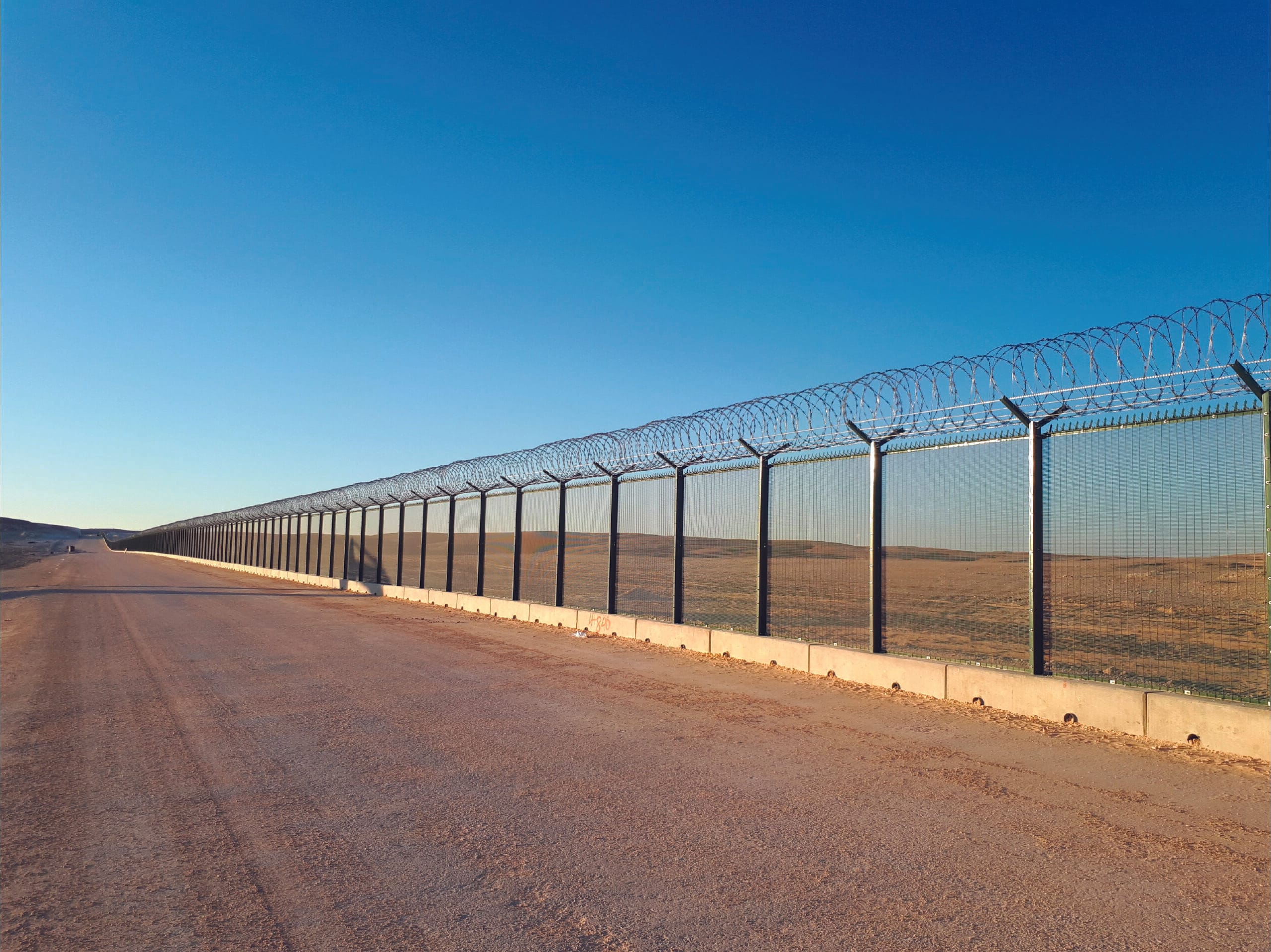
How a Double Skin Mesh Barrier Fence Extends Intrusion Detection Response Time
Security response time depends on one factor more than any other: how long a perimeter can delay an intruder once a breach attempt begins. A double skin mesh barrier fence is a layered fencing system that combines two mesh panels spaced apart to create additional resistance against cutting and climbing, giving security teams more time to detect and respond before an intruder reaches the protected asset.
This guide explains how that layered design extends the delay window compared to single layer fencing, and what site managers should evaluate when specifying it for high-security applications.
Why Delay Time Is the Real Measure of Perimeter Performance
Physical security follows a simple sequence: deter, detect, delay, and respond. A fence that only deters or detects does little if it fails to delay an intruder long enough for a response team to act. A double skin mesh barrier fence is built specifically to maximize this delay window, since an intruder attempting to breach it must defeat two separate mesh layers rather than one.
Key reasons delay time matters:
- Response teams often need several minutes to reach a remote perimeter point
- Cutting through two mesh layers takes significantly longer than cutting through one
- Extended delay increases the chance that detection systems trigger before a breach completes
- Sites with slower response coverage benefit most from a longer delay window
Delay time is rarely discussed in isolation because it only matters relative to response time. A site with an on-site guard force stationed thirty seconds from the perimeter has different delay requirements than a remote facility where the nearest responder is fifteen minutes away. Security planners should treat delay time and response time as two sides of the same calculation rather than evaluating fencing performance on its own.
How Double Skin Construction Physically Slows an Intruder
A double skin mesh barrier fence works by spacing two separate mesh panels apart, typically with a gap between the inner and outer layers. An intruder attempting to breach the fence must cut or climb through the outer layer, cross the gap, and then repeat the process on the inner layer. This doubles the physical effort and time required compared to a single mesh panel.
| Construction Element | Security Function |
| Outer mesh layer | First point of resistance and initial delay |
| Spaced gap between layers | Disrupts momentum and tool leverage |
| Inner mesh layer | Second resistance point requiring repeated effort |
| Reinforced posts and framing | Maintains structural integrity under sustained attack |
High security welded wire mesh fence systems built on this double skin principle are specifically engineered to maximize the time an intruder spends at the perimeter rather than progressing toward the asset being protected. The spacing between layers is not incidental. A gap that is too narrow allows an intruder to work both layers with the same tool position, while a properly engineered gap forces a change in stance, tool angle, or climbing technique that adds meaningful time to the attempt.
Weld density plays an equally important role in this equation. Each mesh layer needs a tight enough aperture and strong enough weld points that cutting through either layer requires sustained effort rather than a single quick action. A related discussion on how mesh construction affects intrusion resistance can be found in the guide covering galvanized welded wire mesh fence systems, which breaks down how weld point density and wire gauge influence cutting resistance across different fencing products.
Where Double Skin Mesh Fencing Makes the Biggest Difference
Not every site needs the added delay a double skin system provides. Facilities where response time is limited, or where the consequences of a breach are severe, benefit most from this layered approach.
- Remote substations and utility sites with longer response windows
- Data centers where even brief unauthorized access carries significant risk
- Government and defense facilities with strict intrusion delay requirements
- Sites with a documented history of forced entry attempts
- Locations where perimeter intrusion detection systems are already in place and need additional delay to be effective
Security mesh fencing with double skin construction pairs particularly well with electronic detection systems, since the added delay gives those systems more time to trigger an alarm and initiate a response before a breach is complete. Facilities that fall into more than one of these categories should treat double skin construction as a baseline requirement rather than an optional upgrade, since the combined risk factors compound rather than simply add together.
Comparing Double Skin Mesh Fencing to Single Layer Alternatives
Site managers weighing a double skin system against standard single layer mesh fencing should consider how each performs under a sustained intrusion attempt. Beyond raw resistance, the decision also comes down to project budget, the value of what’s being protected, and how far a response team is from the perimeter.
| Factor | Single Layer Mesh Fencing | Double Skin Mesh Barrier Fence |
| Cutting resistance | Moderate | Significantly higher |
| Climbing resistance | Moderate | Higher due to layered depth |
| Delay time under attack | Shorter | Extended |
| Installation cost | Lower | Higher |
| Best suited for | General perimeter boundaries | High-value or high-risk assets |
High security mesh fencing with double skin construction is typically reserved for sites where the added cost is justified by asset value or risk level. Lower-risk facilities or those with shorter response distances may find single layer fencing adequate at a lower cost, making a site-specific risk assessment the best way to decide.
Cost isn’t the only factor. Double skin systems also carry higher maintenance and inspection needs, since both layers require regular checks for damage or wear. Budgets should account for this added inspection labor alongside the higher installation cost.
Pairing Fence Delay With Detection and Response Planning
A double skin mesh barrier fence performs best as part of a broader security strategy rather than as a standalone measure. Detection systems, response protocols, and physical delay all need to work together to close the gap between an intrusion attempt and an effective response.
- Fence-mounted or buried detection sensors along the perimeter line. These sensors provide the earliest possible warning that an intrusion attempt is underway, giving response teams a head start before the double skin layers are even engaged.
- Camera coverage that activates automatically when detection systems trigger. Automatic activation removes the delay of manual monitoring and lets security personnel visually confirm a threat the moment it’s flagged.
- Documented response times for on-site or dispatched security personnel. Knowing exactly how long a response takes to reach the perimeter helps determine whether the fence’s delay window is sufficient for a given site.
- Regular testing of detection and response coordination, not just fence inspection. A fence can be structurally sound while the detection and response chain around it has gaps, so both need to be tested together on a routine basis.
According to the UK’s National Protective Security Authority on perimeter intrusion detection systems, detection alone provides no delay and works best paired with physical barriers that slow an intruder down. Facilities that overinvest in detection while underinvesting in the barrier undermine the strategy.
Facilities should also compare their existing fencing against alternative designs. The palisade fencing specification guide offers a useful comparison point for vertical barriers versus mesh-based delay systems, since each achieves resistance differently. Coordinating detection, response, and delay as one system, rather than in isolation, is what ultimately stops an intrusion before it reaches its target.
Where This Fits Into Broader Infrastructure Protection
The value of extended delay time becomes clearer at facilities where a breach carries consequences beyond the immediate site. According to the Cybersecurity and Infrastructure Security Agency’s overview of critical infrastructure sectors, utility, water, and communications facilities are among those where a physical security breach can disrupt services relied on by entire communities, reinforcing why response time at the perimeter carries weight well beyond the fence line itself.
Facilities in these sectors often operate under regulatory or contractual requirements that specify minimum delay times for perimeter barriers. Project teams evaluating fencing upgrades for these sites should also review how supplier selection affects overall project timelines and material quality, a topic covered in more detail in the guide on what to look for in a wire mesh fencing supplier for critical infrastructure projects.
Delay Is the Difference Between Detection and Prevention
A double skin mesh barrier fence extends intrusion detection response time by forcing an intruder to defeat two separate layers of resistance instead of one, buying critical minutes for detection systems and response teams to act. For sites where the cost of a breach outweighs the cost of stronger fencing, this layered approach delivers a measurable security advantage over single layer alternatives. Response planning built around this extended delay window gives security teams the best chance of stopping an intrusion before it reaches its target.
Black Security Products engineers double skin mesh systems specifically to maximize this delay window for high-security and critical infrastructure applications, giving site managers a fencing option built around real-world response timelines rather than boundary marking alone.